
Italian Opposition Challenges Meloni Government Over Gambling Sector Future
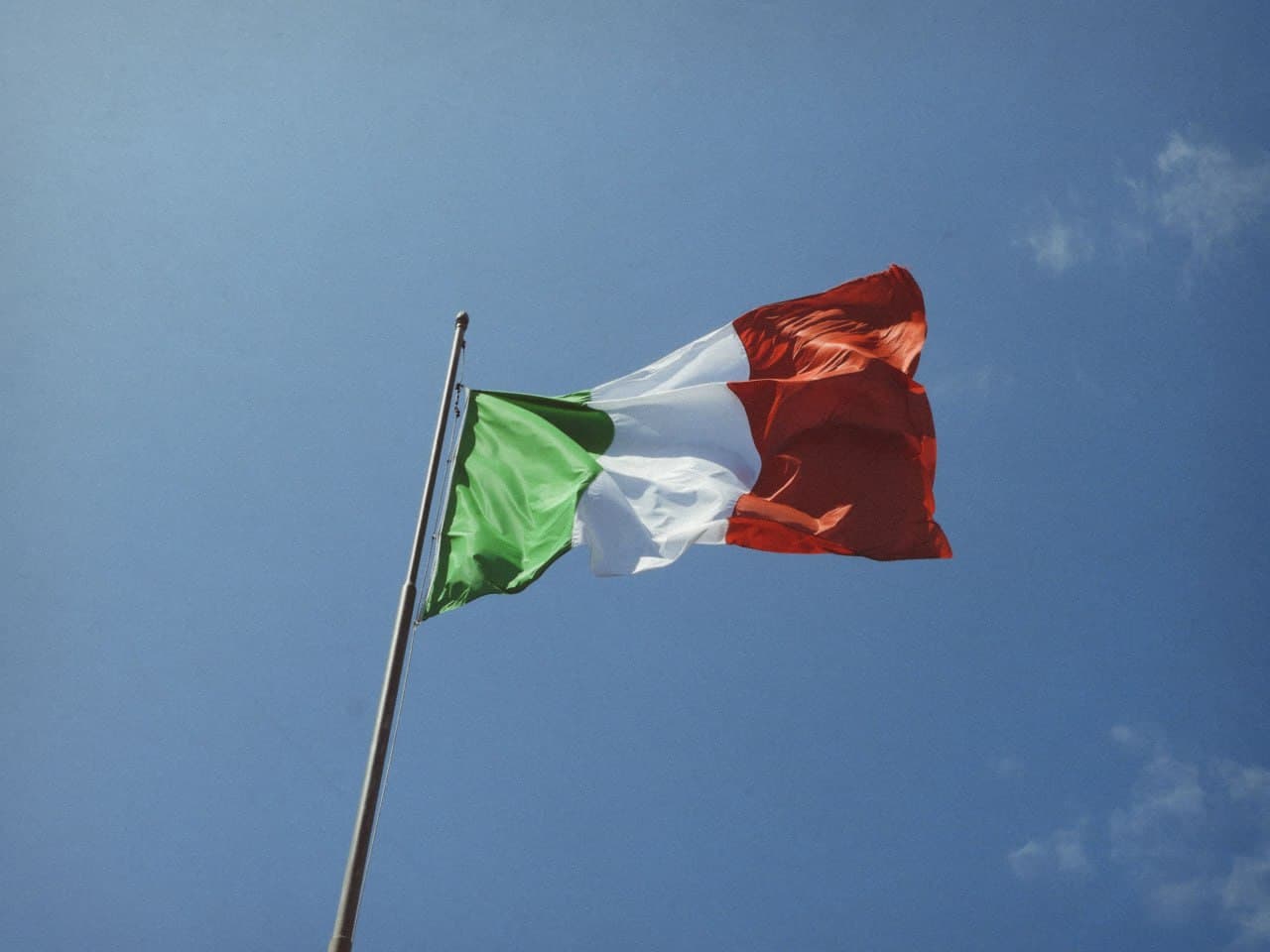
Italy is heading into one of its most important regulatory phases in years. The opposition wants public health to lead the debate. The government wants to defend its reform programme. The August deadline is approaching fast.
5 Key Takeaways:
- The Meloni government has chosen not to state its position immediately following the parliamentary debate on Italy's regulated gambling sector held on 3 June 2026, with the executive reserving its assessment for the next stages of parliamentary examination
- By August 2026, the government must complete a new phase of reform under the tax delegation law through a legislative decree dedicated to the reorganisation of Italy's land-based regulated gambling network
- Total stakes in Italy reached approximately €165 billion in 2025, equal to 7.3% of national GDP, with the online channel exceeding the €100 billion threshold for the first time
- The opposition, represented by the Democratic Party and the Five Star Movement, is pushing for greater data transparency, stronger controls, minor protection and progressive reduction of gambling supply, framing gambling disorder primarily as a public health issue
- The governing majority, represented by Brothers of Italy, defends the reform process as a necessary tool to combat illegal gambling activity and maintain a robust legal framework, with new technological tools including the single self-exclusion register expected to play a central role
Italy's Gambling Reform Reaches a Defining Political Moment
Italy's regulated gambling sector is approaching one of the most consequential regulatory milestones in its recent history, and the parliamentary debate held in the Chamber of Deputies on 3 June 2026 has crystallised the political tensions that will shape what emerges. Acting president Giorgio Mulè confirmed that the Meloni government would not state its position immediately, postponing the continuation of the debate to a later sitting and leaving the substantive direction of the reform open as the August deadline approaches.
The fundamental obligation driving the debate is concrete. By August 2026, the government must complete a new phase of reform provided for under the tax delegation law, through a legislative decree dedicated to the reorganisation of Italy's land-based regulated gambling network. The measure will need to address some of the sector's most complex issues simultaneously: the territorial distribution of points of sale, relations among the State, Regions and local authorities, consumer protection, the fight against unlicensed gambling and the prevention of gambling harm. Each of these threads contains its own political complexity, and the cumulative effect is one of the most demanding regulatory packages any Italian government has had to deliver in the gambling space.
The opposition's position was articulated principally through Democratic Party MPs Stefano Vaccari and Ilenia Malavasi, who used the scale of the Italian market as their starting point. Vaccari argued that when citizens in a country reach the point of gambling €165 billion in a year, equivalent to 7.3% of national GDP, the activity can no longer be treated as a marginal recreational phenomenon. According to figures cited during the debate, total stakes in Italy reached around €165 billion in 2025, with the online channel alone exceeding the €100 billion threshold for the first time. Vaccari framed the risk as one of a state becoming progressively dependent on the economic losses of its citizens, and called for reform focused on greater data transparency, stronger controls, the protection of minors, the prevention of problematic behaviour and the progressive reduction of supply.
Gambling disorder featured prominently throughout the opposition's case. PD MP Ilenia Malavasi argued that gambling disorder, recognised as an Essential Level of Care under the National Health Service, should be approached primarily as a health issue rather than as a moral or character problem. The opposition has contested the reorganisation of the Observatory for the Fight Against Pathological Gambling, arguing that replacing the specific body could reduce monitoring capacity. The governing majority's response has been that this is not a cancellation but rather an integration of the Observatory's responsibilities into a broader system dedicated to different forms of addiction.
The Five Star Movement, represented by MP Gilda Sportiello, focused its intervention on the governance of the Customs and Monopolies Agency (ADM), the body that plays a central role in regulating Italy's gambling sector. Sportiello identified what she described as a structural conflict of interest within the ADM, where functions of regulation, control, promotion and tax revenue maximisation are all carried out by the same body. For the M5S, which strongly backed the 2018 Dignity Decree that effectively banned gambling advertising, the concentration of these roles raises legitimate questions about the balance between state economic objectives and public health protection.
Sportiello also challenged the linguistic framing of the sector, arguing that the term "gaming" obscures what is actually being discussed. The reference is to betting and gambling, she said, distinguishing those activities from play in the sense of building relationships and communities. The digital dimension drew particular attention, with the M5S identifying online gambling as the most rapidly growing and concerning area given its accessibility for vulnerable individuals. Platform accountability and stronger control tools were positioned as central elements of any new regulatory phase.
The governing majority's response was delivered by Brothers of Italy MP Luciano Ciocchetti, who defended the reform process launched under the tax delegation law. Ciocchetti positioned the licensing system as a primary tool through which gambling activity can be kept within a framework controlled by the State, with the regulated market serving as a bulwark against unlicensed gambling networks that operate outside any consumer protection or oversight. He rejected the suggestion of a regulatory vacuum, pointing to the reform already underway through the tax delegation law process and the work being done to connect health protection and gambling disorder prevention with public safety, the fight against unlicensed gambling and user protection.
Technology and prevention will play a central role in the future regulatory framework according to the majority's position. Strengthening the single self-exclusion register, building out self-monitoring systems and developing tools to monitor gambling behaviour have all been cited as priorities. The aim is early identification of potential problem situations without weakening the regulated market, with structured cooperation between licensees, institutions and health authorities forming part of the broader approach. The forthcoming decree on the land-based network will also need to address the relationship among national, regional and municipal rules to achieve greater regulatory uniformity.
Ciocchetti also placed the current debate in historical context, citing the so-called "Bersani liberalisations" of 2006 promoted by then Minister of Economic Development Pier Luigi Bersani during the centre-left Prodi government. With Decree-Law 223 of 2006, later converted into Law 248 of 2006, Italy intervened in the gaming and betting sector by introducing measures to combat irregular gambling, tax evasion and tax avoidance, and by reorganising the legal framework. The majority's argument is that a significant part of the opening of Italy's legal gambling market was developed during centre-left governments, creating what Ciocchetti characterised as a political contradiction in the current opposition's stance.
The broader debate also touched on the church's interventions on addiction, with Vaccari referencing Pope Francis and Pope Leo XIV on the responsibility of institutions facing social fragility. The cross-cutting nature of the gambling question, encompassing licensing, taxation, public health, technology, social responsibility, legality and the role of the State, was apparent throughout the chamber discussion.
Expert Analysis
The €165 Billion Stakes Figure Changes the Political Calculus
A stakes figure equivalent to 7.3% of GDP is the kind of number that makes any government's political position considerably more complicated. The Italian regulated gambling sector has grown to a scale where it is no longer politically possible to treat it as a peripheral issue, and the fiscal dependency dimension that opposition MPs have raised is genuinely significant. When state revenue depends materially on continued gambling activity, the political will to impose meaningful restrictions on that activity weakens regardless of which party holds power. The opposition's argument that this dynamic compromises the ability of the State to govern the phenomenon rather than depend on it deserves serious engagement rather than dismissal. How the August reform package handles the tension between economic interest and public health protection will reveal more about the current government's actual priorities than any rhetorical commitment to player protection in isolation.
The ADM Governance Question Deserves More Attention Than It Has Received
The M5S's identification of a structural conflict of interest within the Customs and Monopolies Agency is one of the more substantive critiques to emerge from the parliamentary debate. Combining regulatory authority, control functions, promotional responsibilities and tax revenue maximisation within a single body creates incentive structures that are difficult to reconcile with effective consumer protection. Other European regulators have moved progressively toward separating these functions across distinct institutions precisely because the conflicts of interest become unmanageable at scale. Whether Italy is willing to consider similar institutional reform, or whether the ADM's existing structure is treated as politically untouchable, will be one of the more revealing aspects of the next phase of regulatory development.
The Online Channel Crossing €100 Billion Should Drive the Digital Reform Agenda
The confirmation that Italy's online gambling channel has exceeded €100 billion in stakes for the first time underlines how rapidly the structural composition of the market is shifting. The current regulatory framework was largely designed when land-based activity dominated the market, and the inherited architecture is increasingly mismatched with where the genuine commercial and consumer protection challenges now sit. The opposition's emphasis on digital platforms, online accessibility and the particular vulnerabilities of younger users gambling primarily through mobile devices captures something important about how the market has evolved. Any reform package focused predominantly on the land-based network, even with strong technological prevention elements, risks addressing yesterday's regulatory challenges rather than tomorrow's. The August decree will need to demonstrate that the Italian regulatory framework is genuinely keeping pace with where Italian gambling activity actually happens.
Enjoyed this article? Share it: