
Håvard Lehn: Esports Has Been Poorly Run and iGaming Has Paid the Bills
 By Antonina Tupikova · Founder, iGaming Times7 min read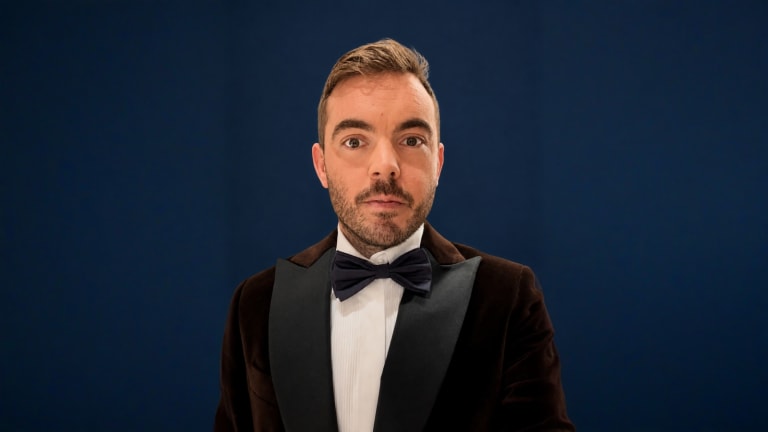
The Nordic Network group chief executive has just bought a Counter-Strike team. He is also the person willing to say that operators splashing cash on jerseys removed any incentive for esports organisations to run sustainable businesses, and that it is about to stop.
- Håvard Lehn, group chief executive of Nordic Network, says esports "is, and has been, very poorly run", and that iGaming money removed the incentive for organisations to fix their cost bases because operators "have been paying the bills"
- He argues the sector's funding correction is a management failure rather than a structural one, and that his group bought into a Counter-Strike 2 roster at a discount to prove a sponsored esports business can generate a return
- On creator marketing he says failed partnerships are usually the work of "an affiliate manager under pressure to meet short-term targets who ends up overselling their product", and that his group is far more cautious about partners than it was one to three years ago
- He draws a clear line on monetising the Counter-Strike audience, singling out skins with real-money value and unlicensed betting sites, and says gambling products need proper regulation and robust age verification
- On Finland's incoming licensing regime he says success means players do not feel the need to seek offshore sites, warning that getting the balance wrong creates "a black market that doesn't need to exist"
The Affiliate Boss Who Just Bought a Counter-Strike Team
Almost every operator in Europe has spent money on esports in the past five years, and almost none of them will say what they got for it. Sponsorships have been announced, jerseys have carried logos, and organisations have folded or cut rosters anyway. The convention in the industry is to describe this as a market correction and move on.
Håvard Lehn is not doing that. The group chief executive of Nordic Network, the parent of the affiliate network Nordic.Partners, has spent fifteen years in the sector, starting as a journalist and content writer before joining Betsson as a customer support agent and working up. He founded Nordic Affiliates in 2019, later joined forces with the founders of Nordic.Partners, acquired the affiliate technology platform AffCollect, and this year handed the Nordic.Partners chief executive role to Sara Hägge to take a group position across Nordic.Partners, AffCollect and Princeps.
In July his group bought the Andorran Counter-Strike 2 organisation Achieveminds, relaunching it as Nordic Partners Gaming. Its founder Fabian Broich stays on to run it, with Lehn joining the board. The team had climbed from outside the world's top 200 to around the top 60 in the months before the deal.
That purchase is what gives his criticism weight. It is easy to say esports is badly run from outside it. Lehn is saying it while owning a roster and while selling esports partnerships to gambling operators, which means the argument is testable against his own results.
We put 12 questions to Lehn on his route into the industry, the founding of the network, esports economics, creator partnerships, where he draws the line on monetising young audiences, and Finnish regulation. His answers are reproduced in full below, edited only for spelling and punctuation.
On the Route In
You started in this industry as a live poker tournament updater and a freelance journalist covering gaming, before moving into affiliate management at Betsson and Betsafe. What did those early content roles teach you about audiences that you still apply as Group CEO?
I have been working in or closely with the iGaming industry for a good 15 years now and have followed its development very closely. During that time, I've been fortunate to work my way up, gaining invaluable knowledge and experience along the way. I started out as a journalist and content writer, but I think the period when I learned the most about the industry was when I joined Betsson as a Customer Support Agent and grew with the company. It gave me a first-hand view of the challenges and opportunities within the industry, as well as the chance to work alongside so many ambitious and genuinely talented people.

Nordic Affiliates launched in 2019 and the network followed. Take us back to the founding conversation. What gap did you see in the Nordic affiliate market that convinced you there was room for another network, and which of your own frustrations as an affiliate proved hardest to actually solve once you were the one running things?
We founded Nordic Affiliates Ltd because we truly believed we had strong in-house expertise that could fill gaps not only in the regulated Nordic market, but also in the US with OnlineGamblers.com. We focused on SEO-friendly websites with high-quality content written for humans, by humans.
However, the US market is a story in itself, and probably a good example of how overregulation can create its own problems. The amount of paperwork we needed to complete to obtain licences as a vendor and affiliate was incredible. And, as you might be aware, a huge number of affiliates entered the US market, but there aren't many left today, at least not many making good money.
After a few years, a great opportunity opened up for us when the current co-founders of Nordic.Partners approached us about teaming up. They had a strong vision but were struggling to drive growth within the company. My partner and I came in, helped structure the business and grew the company alongside the original co-founders, who are still with us and doing an incredible job running the day-to-day business.
The acquisition of Affcollect was another major milestone, giving us control of our crucial tech infrastructure as well. One of the biggest issues we solved, both for ourselves and other affiliates, was the endless amount of time spent chasing payments, checking stats and, last but not least, optimising performance against our KPIs.
You handed the Nordic.Partners CEO role to Sara Hägge and stepped up to Group CEO across Nordic.Partners, AffCollect and Princeps. What convinced you it was time to stop running the core business day to day, and where is the genuine operating synergy between businesses as different as an affiliate network, a SaaS platform, a talent agency and an esports organisation?
I had a feeling we were growing at such a pace across all areas of the company that it was time to restructure and focus on the areas where I can add the most value, primarily business development. I also knew Sara was the perfect person to pass the reins to and lead the business through its next stage of growth.
We see significant synergies between the companies, particularly from a marketing perspective. As I also spoke about in Riga during ACE Alliance, diversification is important not only for us, but more importantly for our clients. We need to be proactive and ensure we remain attractive to different sources of traffic. I feel we're ahead of many of our competitors in that respect, we're always looking for new ways to complement traditional customer acquisition channels. The last few years have been tough for many businesses that have continued to base their strategies predominantly on SEO or PPC, or even a combination of the two.
On Esports Economics
NPG was launched on the thesis that esports organisations attract highly engaged audiences but lack sustainable revenue, while licensed operators want access to those audiences but lack credible guidance. Why has that gap persisted for so long, given how many operator and esports sponsorships have come and gone?
I will probably get a few reactions for saying this, but esports is, and has been, very poorly run, and that isn't only the fault of esports organisations. It hasn't been sustainable in any way, shape or form.
iGaming operators have jumped on the trend and invested incredible amounts of money, often simply splashing the cash. As a result, there has been little incentive for esports organisations to adjust their budgets and ensure they're running sustainable businesses, because iGaming operators have been paying the bills.
That won't last, and I'm committed to proving that, as an iGaming operator, you can invest in esports and generate a return. However, as with any business, it needs to be done properly. Many operators are throwing money at organisations simply to have their logo on a jersey, but esports is so much more than that. It's community, it's streaming, it's engagement and it has an incredibly strong and loyal following.
Do it properly, at the right price, and it can be sustainable. We're here to help both esports organisations and iGaming operators achieve exactly that.
Buying a Counter-Strike 2 roster outright is a very different commitment from brokering sponsorships. Why did Nordic Network decide it needed to own a team rather than simply represent them, and what has running AM Gaming taught you that you could not have learned as an intermediary?
For us, it was crucial that we weren't simply acquiring the team itself, but the knowledge and expertise within it about how an esports organisation really works, the kind of knowledge you can't simply buy. But somehow, we managed to get both. And I have to say, it's also pretty cool to see our team compete.
We'll use this as a proof of concept to demonstrate that you can build a sustainable esports business that creates genuine value for its sponsors. And, importantly, it also ties back to our wider strategy: we're diversifying and creating another source of customers for our clients.
Esports has been through a well-documented funding correction, with several major organisations cutting rosters or exiting altogether. Are you entering the sector at a discount, or buying into a structural problem that iGaming money alone cannot fix?
The correction we're seeing is mainly the result of poor management, and we can help change that landscape. We're going to prove it, but not at any price. We bought in at a valuation that gave us access to Fabian Broich, whose expertise alone is worth many times what we paid, so from our perspective, we bought at a significant discount.
The industry has been poorly run, with salaries and operating costs far too high relative to the income being generated. We're already operating more sustainably than many of the most successful teams, which continue to pay high salaries and significant performance bonuses.
Esports organisations also tend to struggle to extend existing partnerships because they aren't creating enough tangible value for brands. Too often, sponsorship isn't treated as a genuine collaboration where both sides need to succeed. We want to change that, using the knowledge and expertise we now have in-house.
On Creators and Where the Line Sits
"Authentic partnership" is one of the most overused phrases in creator marketing. In practical, contractual terms, what does an authentic operator and creator deal look like compared with a purely transactional one, and are operators actually willing to commit to the deal lengths and guarantees that implies?
Well, it depends on how you look at it. We try to make operators understand that whenever you commit to an influencer, streamer or content creator partnership, you need to think long term. You have to stay relevant to that community, and your product needs to be a genuine fit for the audience. If either of those elements is missing, the campaign is unlikely to succeed.
That's why we spend a lot of time finding the right match between an operator and a creator. It's not simply about reach or follower numbers, it's about finding a partnership that makes sense for both the brand and the audience.
Gaming audiences are quick to detect and punish inauthentic sponsorship. Have you seen an operator and creator partnership fail because the fit was wrong, and what was the lesson?
We see this quite often, to be honest, and it doesn't reflect well on any of the parties involved. It's usually the result of an affiliate manager under pressure to meet short-term targets who ends up overselling their product.
We're much more cautious about who we work with now than we were, say, one to three years ago. We've learned from experience that choosing the right partners is far more important than chasing short-term results.
Where do you draw the line on what a gaming audience should be monetised with? Counter-Strike in particular has a long history with skin gambling and unlicensed sites, and a significant share of that audience is under 18.
In Europe, CS2 has an estimated 9 to 10 million monthly players, making it one of the game's largest regional audiences, although Valve doesn't publish an official regional figure. Available demographic estimates suggest that at least 76% of players are 18+, with the 18 to 34 age group alone accounting for around 76%. Recent CS2 esports viewing data also indicates that the audience is overwhelmingly adult, with around 95% of viewers aged 18 or over, including 78% aged 18 to 34 and 16.5% aged 35 to 44.
That said, there is still a meaningful under-18 audience, and that's where I would draw a clear line around gambling-like monetisation, particularly when it comes to skins with real-money value and unlicensed betting sites. Monetisation should instead focus on areas such as transparent cosmetic purchases, sponsorships and other direct purchases, while any gambling products need to be properly regulated and subject to robust age verification.
On the Traffic Shift and Finland
You have written that the era of easy traffic is over, with SEO and PPC losing dominance to community-led and video-first channels. How far has that shift already shown up in Nordic.Partners' own traffic mix, and how quickly are your affiliates adapting? You also argued that operators no longer need to buy an influencer because they can create one, which sits awkwardly next to the case for authentic partnerships with established communities. How do you square the two?
Our affiliates are adapting well, and a major reason for that is that we handle much of the work they would otherwise have to manage themselves if they weren't working with an innovative affiliate network.
From the operator's perspective, it depends on how they view the opportunity. We're here to help operators find the perfect match, taking care of a significant amount of work so they can focus on running and developing their product. Not every operator has the resources or expertise to do this themselves, whether that's identifying the right influencer or content creator for their brand, or building and managing the partnership once it's in place.
You have called Finland's incoming licensing regime a major milestone for the Nordics, while warning that too restrictive a framework will push affiliates offshore. What specifically would need to be in the final framework for you to call it a success, and what is your read on where it is heading?
A success would be if players are put first and don't feel the need to seek out offshore gambling sites to access the best products and opportunities. For me, there's a fine line between overly restrictive regulation and effective regulation. If you get that balance wrong, you risk pushing players towards offshore operators and creating a black market that doesn't need to exist. I'm also curious to see how markets such as Finland develop, because affiliates will always exist in some form. The question is how they fit into the regulated ecosystem and the role they're allowed to play within it.
Where does the next phase of growth come from: deeper penetration of the Nordics, expansion into other regulated markets, or building out the esports and creator side? The AffPapa partnership and the Esport Zone in Cancun suggest a deliberate push into Latin America, so where do you want Nordic Network to be in three years, and what would you consider a failure?
Over the next three years, we'll continue building on the momentum we have, with esports and LatAm being two natural areas of growth for us. I prefer not to focus on what might constitute failure; I'd rather focus on what success looks like and what we need to do to achieve it.
The Most Useful Thing He Says Is That Operators Created the Problem
The standard account of the esports funding correction blames overvaluation, or venture capital, or the leagues. Lehn puts it somewhere less comfortable for his own customers: operators splashed cash, which removed any incentive for organisations to bring their cost bases into line with their income, because the bills were being paid regardless. That is a claim about incentives rather than about competence, and it explains something the competence story does not, which is why the correction arrived so suddenly and so uniformly. Subsidised businesses do not restructure while the subsidy continues. It also implies that the correction is not finished, because on his account the discipline has to come from the sponsor withdrawing rather than from the organisation reforming. Any operator currently renewing an esports deal should read that as a warning about what their own money has been doing.
Owning the Team Makes the Argument Falsifiable, Which Is Rare
Plenty of people in gambling marketing will tell you esports sponsorship can work if done properly. Almost none of them has bought a roster and put their own capital behind the claim. Lehn has, and he has been specific about the mechanism: buy at a valuation that reflects the sector's distress, retain the operating knowledge rather than just the players, and run a lower cost base than teams still paying high salaries and performance bonuses. He says the acquisition gave access to Fabian Broich, whose expertise he values at many times the purchase price, which is a candid admission that the roster was not the main asset. All of this can be checked in eighteen months against results, sponsor renewals and whether Nordic Partners Gaming is still solvent. That is a more honest position than the industry usually offers, and it should be held to it.
His Own Demographic Figures Do Not Reconcile, and the Point Survives Anyway
Asked where he draws the line on monetising the Counter-Strike audience, Lehn supplied estimates: 9 to 10 million monthly European players, at least 76% of players aged 18 or over, and the 18 to 34 group alone accounting for around 76%. Those last two cannot both hold, since a single band cannot equal the whole adult population unless nobody is over 34, and he separately cites 16.5% of viewers aged 35 to 44. He flags the numbers as estimates and notes Valve publishes no official regional figure, so this is imprecision rather than misdirection. The substantive answer does not depend on them. He accepts there is a meaningful under-18 audience and draws the line at skins with real-money value and unlicensed betting sites, which is the position that matters, and it is further than most people selling access to this audience are willing to go on the record.
The Line on Creators Points at His Own Trade
The most quotable admission is about why creator partnerships fail: "an affiliate manager under pressure to meet short-term targets who ends up overselling their product". That is not a criticism of creators or of operators. It is a criticism of the incentive structure inside affiliate and acquisition teams, which is the business Lehn is in. Saying that his group is much more cautious about partners than it was one to three years ago is an acknowledgement that it was previously less so. Read alongside his account of esports, a consistent thesis emerges: in both cases the failure is short-term commercial pressure producing deals that cannot survive contact with an audience. Whether Nordic Network is better at resisting that than its competitors is the question its clients should be asking, and the honest answer is that it is too early to know.
Lehn is saying out loud what operators have been paying for and not measuring. The useful part is that he has now made himself measurable.


