Argentine Senate Passes Online Betting Advertising Ban 72 to 0 and Sends It to the Executive
 By Antonina Tupikova · Founder, iGaming Times4 min read
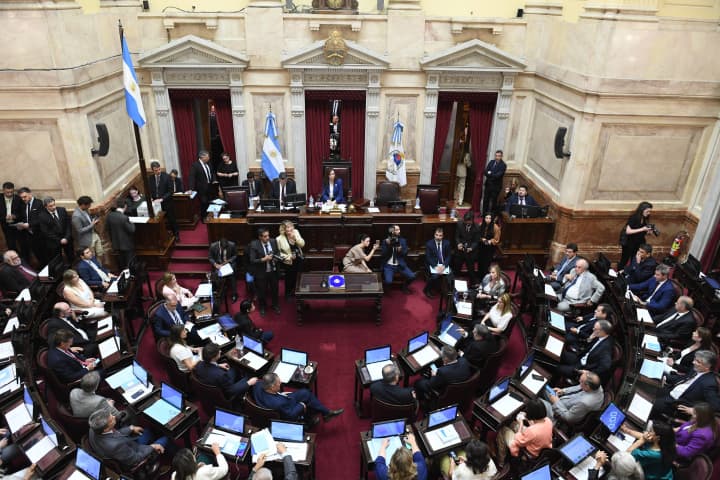
All 72 senators voted for the Chamber of Deputies' text without amendment on 26 November 2026, completing its passage through Congress. It still has to be promulgated and published before it takes effect, and a second bill on blocking unauthorised sites, passed the same night, now needs the Deputies' approval.
- The Senate of Argentina approved the bill on problem gambling prevention and online betting, file CD-26/24, by 72 votes to 0 with no abstentions on 26 November 2026, and its presiding officer declared it law
- The text is the one the Chamber of Deputies passed on 27 November 2024, so it goes to the Executive, which can promulgate or veto it under the Constitution
- It bans advertising, promotion and sponsorship of online gambling, including welcome bonuses, the sponsorship of sports teams and athletes, stadium naming and pitch-side signage
- It requires facial recognition checks against the national identity register, bars credit cards and creates a national self-exclusion register
- A complementary bill on unauthorised gambling sites, S-2044/26, passed by 71 votes to 0 after changes agreed on the floor and now goes to the Chamber of Deputies
Senate Votes 72 to 0 on the Deputies' Text
The Senate took the bill at an ordinary sitting that began at 12:00 on 26 November 2026 and was chaired by its provisional president, Bartolomé Abdala, according to a press note published by the Senate dated 27 November 2026. The note says the chamber made the bill law unanimously.
The Senate's vote record, numbered 16 and timed at 23:05 on 26 November 2026, shows 72 votes in favour, none against and no abstentions, with all 72 members of the chamber present. The bill was voted in general and in particular in a single vote.
The stenographic record of the sitting has Abdala declaring that the bill "becomes law" and that it would be communicated to the national Executive (our translation). The bill reached the floor under the preference motion the Senate approved on 19 November 2026, which allowed it to be taken with or without a committee report.
No amendment to the Deputies' text was put to the vote. Senator Patricia Bullrich of the governing La Libertad Avanza bloc told the chamber during the later debate: "We did not want to change it so as not to delay the treatment of the bill that is already law" (our translation).

That is the arrangement the Senate's committees had left to the bloc leaders on 25 November 2026, after the joint committee meeting called for that day: pass the Deputies' text first and put the governing bloc's changes in a separate bill. The record of the bloc leaders' meeting of 25 November 2026 lists both items for the sitting, with the second, labelled "Ludopatía II", to be requested on the floor.
What the Text Requires
The provisions below are taken from the text the Chamber of Deputies sanctioned on 27 November 2024, which runs to 54 articles.
Article 8 prohibits the advertising, promotion and sponsorship of online gambling and betting across internet platforms and social networks, audiovisual media, outdoor advertising, sportswear, print, radio and television. It prohibits welcome bonuses, the sponsorship of sports teams or individual athletes, the use of a brand to name sports facilities and stadiums, and fixed or digital signage at playing fields and stadiums. It also prohibits non-traditional advertising and indirect or covert advertising through influencers.
Article 9 exempts advertising or promotion inside gaming halls, agencies and authorised lottery sales points, which must carry a health warning.
Article 10 requires operators to use digital identity systems connected to the database of the national identity register, RENAPER, to validate identity by facial recognition. The check applies at registration, at the start of each session, during sessions and before a payout. The text presents this as the age verification mechanism that must make access by minors impossible.
Article 13 bars loyalty actions, binary options, microtransaction or loot-box games and a list of gamification techniques, such as rewards for consecutive deposits in a short period.
On payments, article 29 allows bank debit cards and electronic wallets holding funds, each subject to a daily limit equal to the bank's cash machine withdrawal limit. Article 30 bars payment methods tied to accounts opened for social assistance benefits, and article 31 bars credit card transactions on online gambling platforms.
Article 25 creates the Registro Nacional de Autoexclusión, a national self-exclusion register. Article 41 sets administrative fines of 500 to 1,000,000 Unidades de Valor Adquisitivo (UVA), the unit in which the text expresses fines, increased by 50% where the breach affects minors. Article 43 amends the Criminal Code to set a prison term of three to eight years for operating gambling without authorisation from the competent jurisdiction.
Promulgation, Entry Into Force and Deadlines
Under article 78 of Argentina's Constitution, a bill approved by both chambers passes to the Executive, which promulgates it if it approves. Article 80 treats a bill as approved if the Executive does not return it within ten working days. Under article 83, a bill rejected in whole or in part returns to the chamber of origin, and both chambers can insist on it by two thirds of the votes.
Article 50 of the text states that it enters into force on the day after its publication in the Boletín Oficial, the official gazette. The same article gives jurisdictions 120 days to bring into line the agencies and online platforms that are in breach of the "special prohibitions", the heading of article 13.
Two further deadlines appear in the text. Article 33 gives the central bank 120 days from promulgation to adopt the measures needed to enforce the payment rules. Article 53 requires the Executive to issue implementing regulations within 120 days of entry into force.
Article 7 leaves the Executive to decide which body will be the enforcement authority, with the provinces and the City of Buenos Aires acting as local enforcement authorities. Article 52 invites them to adhere to the law.
The Senate documents read for this report give no law number and record no promulgation. The Senate's file for CD-26/24 had not been updated with the vote when it was read on 27 November 2026.
Complementary Bill Goes to the Deputies
The second bill, S-2044/26, is titled "Combate contra el juego ilegal" and was filed on 25 November 2026 by Bullrich with senators Eduardo Vischi, Flavia Royon and Carolina Losada. Because it had no committee report, the chamber first had to agree by two thirds of those present to take it, which it did by a show of hands.
As introduced, the bill requires the communications regulator, ENACOM, to block domains used by unauthorised gambling platforms within 24 hours of learning of them, and the domain registry NIC Argentina to take them down permanently. It extends blocking to mirror sites, instructs the central bank to have banks and payment service providers disable transactions linked to blocked platforms, and adds offences to the Criminal Code for those who knowingly provide essential services to unauthorised operators. Bullrich told the chamber that unauthorised sites are estimated at about 2,500.
Justicialist senators Martín Soria and Anabel Fernández Sagasti objected that parts of the bill conflicted with the text passed minutes earlier, citing its articles on advertising and on prohibited payment methods, and asked for it to go back to committee. After a recess from 23:38 to 23:46, the blocs agreed changes that the parliamentary secretary read out.
Article 1 and article 16 now open with wording that preserves the provisions of the main law, and a new article 16 bis states that the bill is complementary to it. Article 16 prohibits operators from accepting payments from third-party accounts, cash, unidentified crypto-assets or any payment method that does not match the registered user. Articles 4 and 5, on the central bank's role, received what the secretary called minor changes of form.
Vote record 17, timed at 23:52 on 26 November 2026, shows 71 votes in favour, none against and no abstentions, with one senator absent. Abdala said the bill would be communicated to the Chamber of Deputies. The amended text had not been published on the Senate's file when it was read on 27 November 2026.
What Is Settled and What Is Not
The advertising, sponsorship, bonus, identity and payment rules have now cleared both chambers in the form the Deputies wrote in 2024. Their start date depends on two steps outside Congress: the Executive's decision and publication in the Boletín Oficial.
The text itself leaves questions for the implementing stage. It does not name the national enforcement authority, and it relies on the provinces and the City of Buenos Aires to act as local authorities. The 120-day adjustment period in article 50 refers only to the special prohibitions; the text read for this report sets no separate transition period for the advertising and sponsorship ban in article 8.
The administrative blocking powers that the governing bloc wanted are not part of what the Senate sent to the Executive. They sit in S-2044/26, which has passed one chamber only and can still be amended or left unvoted by the Chamber of Deputies.