Federal Judge Sends New York's Kalshi Gambling Suit Back to State Court
 By Antonina Tupikova · Founder, iGaming Times2 min read
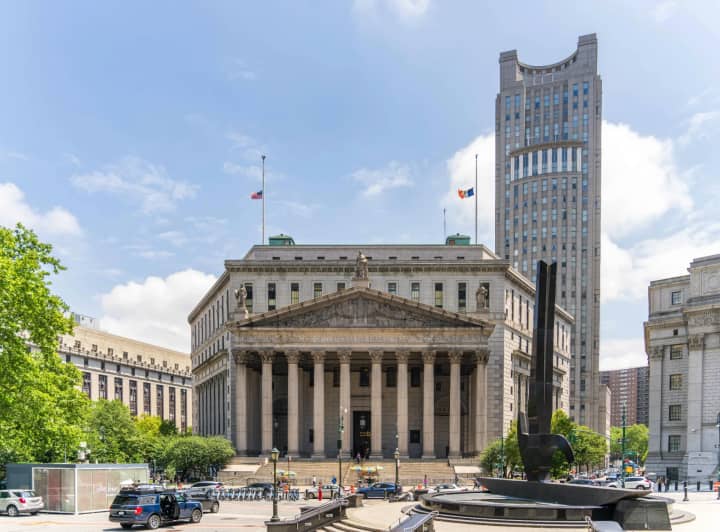
Judge Vernon S. Broderick ruled on 19 November that Attorney General Letitia James' suit, which seeks to stop Kalshi operating in New York without a Gaming Commission licence, does not belong in federal court. The case returns to the Manhattan state court where it was filed, with the question of whether Kalshi's contracts are gambling still undecided.
- A federal judge in Manhattan granted New York's motion on 19 November to send its suit against KalshiEX back to the Supreme Court of New York, New York County
- The 31 July petition seeks to bar Kalshi from running an unlicensed gambling business in or from New York, plus restitution and penalties
- The court held that Kalshi's Commodity Exchange Act arguments are a defence, which cannot support removal, and that the federal officer removal statute did not apply
- Only the claim built on the federal Wire Act raised a federal issue, and the court found it neither substantial nor fit for federal court
- The order refused the state's request for fees and left undecided Kalshi's bid to block the attorney general's advertising subpoena
A Gambling Case the State Chose to Bring in Its Own Court
Broderick's 19-page opinion and order in People of the State of New York v. KalshiEX LLC, No. 26-cv-6550, in the Southern District of New York, directs "immediate remand to the Supreme Court of New York, New York County". The state filed there on 31 July under Executive Law section 63(12), which lets the attorney general seek an injunction against repeated or persistent illegality in a business. Kalshi removed the case the same day, and the state moved to remand on 7 August.
The petition brings eight causes of action, each resting on an alleged violation: one of the State Constitution, three of the Penal Law, three of the Racing Law and one of the federal Wire Act. It alleges that Kalshi runs a gambling business without a Gaming Commission licence and lets users aged 18 to 20 trade. Beyond an injunction, including on advertising, it seeks restitution to customers, disgorgement, a penalty of three times Kalshi's gains and $100,000 for each unauthorised offer of sports wagering. These are allegations that Kalshi disputes.
Kalshi's Federal Designation Was Not Enough to Keep the Case
Kalshi's notice of removal argued that its event contracts are swaps within the exclusive jurisdiction of the Commodity Futures Trading Commission (CFTC). It told the court that pre-emption was "not [a] basis for removal here", so the order does not address it.
Kalshi said its CFTC designation as a contract market is property derived from a federal officer, and that the suit affects the validity of the Commodity Exchange Act. Broderick disagreed: the Act enters the case only as Kalshi's defence. Quoting a July ruling from Wisconsin, the order says federal rules "may permit DCMs to offer event contracts, but they do not guarantee a right to offer such contracts or require DCMs to offer them, nor do they prohibit states from banning them altogether". Kalshi's argument that the CFTC was a necessary party also failed: the agency has not sought to intervene, and the remedy is "to compel joinder in state court, not to assert a right to removal".

The Wire Act Claim Raised a Federal Issue, but Not a Substantial One
Under the Gunn-Grable test, the first seven claims raise no federal question, because none of the state laws conditions liability on federal law; Kalshi's point that its conduct is federally lawful "is asserting an affirmative defense, which is not a basis for removal". The Wire Act claim does raise a disputed federal issue, but the order calls Kalshi's theory of substantiality, routed through the Unlawful Internet Gambling Enforcement Act, "circuitous", and finds that a Wire Act violation "turns on the application of state law".
The federal-state balance was "an independent reason" to remand. "The scope of laws regulating gambling and lotteries is clearly a matter of predominantly state concern," the order says, quoting a 1992 decision. Broderick refused fees, finding that Kalshi raised "colorable argument[s]" that a federal court in Georgia had accepted.
The Order Settles the Forum, Not Whether the Contracts Are Gambling
Nothing in the opinion decides whether Kalshi's contracts are swaps or wagers, or whether federal law pre-empts New York's. The order cites remands of Kalshi cases in Washington and Alabama, and a federal magistrate in Kentucky has recommended the same for that state's suits. In New York, the merits remain before the Second Circuit in Kalshi's own suit against the Gaming Commission, where a panel refused an injunction pending appeal on 3 November.
The Subpoena Fight Now Belongs to State Court Too
Kalshi had asked Broderick on 30 October to stop the attorney general using a 25 September subpoena on advertising, market making and trading, calling it a way around federal discovery rules. After remand, the court "cannot decide" that request. The attorney general has petitioned the state court to enforce the subpoena, and the Gaming Commission has its own subpoena petition there.
An Appeal Route Remains Open
Remand orders are generally unappealable, but 28 U.S.C. section 1447(d) makes an exception for cases removed under section 1442, the federal officer statute Kalshi invoked. The federal docket records no appeal so far.