ACT Bill Would Make Canberra Pokies Cashless and Cut Machines to 1,000 by 2045
 By Antonina Tupikova · Founder, iGaming Times3 min read
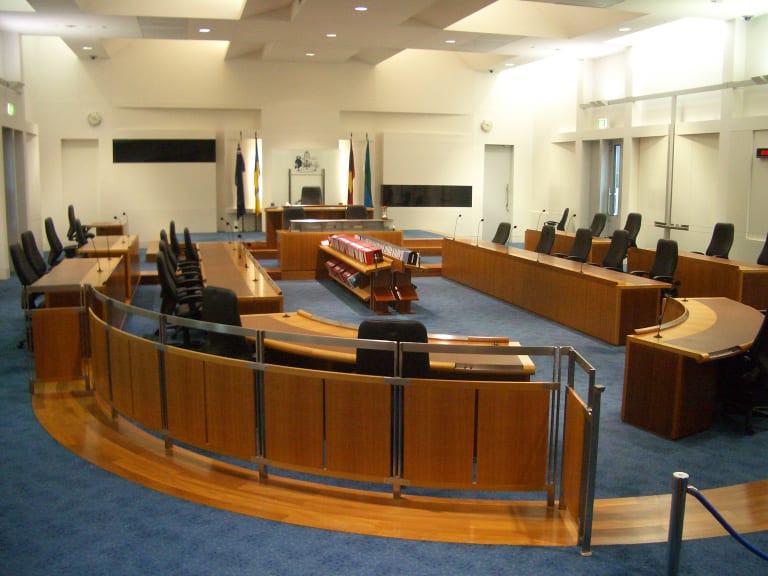
The Australian Capital Territory wants no poker machine played without a verified player card, no card without a loss limit and no ATM in any venue with pokies. The bill also writes a cut to 1,000 authorisations by 2045 into statute, but it has been introduced, not passed.
- Minister for Gaming Reform Marisa Paterson presented the Gaming Machine (Harm Prevention and Reduction) Amendment Bill 2026 to the ACT Legislative Assembly on Tuesday, 20 October; it has not been debated or passed
- Every player would need an identity-verified account and would have to set a net loss limit, and venues would have to stop anyone who has played for an hour without a 15-minute break
- ATMs would be banned from venues with gaming machines 12 months after the law is notified, replacing today's A$250 (approximately $175) daily withdrawal cap, while EFTPOS cash-out restrictions are planned by regulation
- A statutory schedule would lower the cap on authorisations in steps of 500, from 3,000 in 2029 to 1,000 in 2045, after the Territory met an earlier target of 3,500 before July 2025
- Opposition Leader Mark Parton has questioned the cash bans and ClubsACT wants a funded transition, while New South Wales plans only voluntary account-based play
Canberra Puts Mandatory Account-Based Play Before the Assembly
Minister for Gaming Reform Marisa Paterson presented the Gaming Machine (Harm Prevention and Reduction) Amendment Bill 2026 on 20 October, according to the ACT Legislation Register, which lists it as a government bill before the Assembly. Region Canberra describes it as the second tranche of the government's gambling reforms and reports that it will go to committee scrutiny before returning for debate next year. A separate Gambling and Racing Control (Gambling Exclusion) Amendment Bill 2026 was presented on 16 September.
Under the bill, as its explanatory statement sets out, a person would have to apply for a player account and have their identity verified before a venue could issue a player card, and no machine could be played without one. Players would set a net loss limit for each playing period, which defaults to 24 hours. A limit could be lowered at any time but not raised for 48 hours after it was set. A licensee would commit an offence if it failed to stop someone who has played for an hour without a 15-minute break, subject to a reasonable-steps defence. Winnings would go into the player's account, cash redemptions would be capped at A$1,500 (approximately $1,050) per gaming day, and venues could no longer cash cheques. Because every player's contact details would be on file, the bill would also ban direct marketing of gambling by mail, email, telephone, SMS, local media or mobile app.

The cash provisions run on a fixed clock. The bill would replace section 153A of the Act, which currently caps ATM withdrawals at A$250 per gaming day, with a ban on ATMs anywhere on a licensee's premises and on related premises within 500 metres of a venue operating machines. That change would commence 12 months after the Act is notified. The account-based provisions would start on a date the minister fixes by notice, or automatically 18 months after notification. EFTPOS withdrawals are not in the bill; The Canberra Times reported in September that the government intends to ban them by regulation.
A Statutory Timetable to 1,000 Machines
Table 10J of the bill sets authorisation targets of 3,000 by 2029, 2,500 by 2033, 2,000 by 2037, 1,500 by 2041 and 1,000 by 2045, with the minister determining each licensee's surrender obligation in every reduction year. Authorisations stand at just under 3,500, according to Region Canberra. The ACT government committed in 2017 to reach 4,000 by 1 July 2020, according to Assembly Hansard, and reached a later target of 3,500 before 1 July 2025, according to a 2025 ministerial instrument.
Fewer machines have not meant smaller losses. Canberrans lost more than A$200 million (approximately $140 million) on poker machines in the last financial year, a record in nominal terms, on 3,202 machines, The Canberra Times reported on 14 October, citing ACT Gambling and Racing Commission data. The explanatory statement cites the 2024 ACT Gambling Survey, which found 15.8% of adults, over 58,000 people, reported at least one type of gambling harm, with gaming machines accounting for a third of the total burden.
Clubs and the Opposition Push Back on Cash
When the package was announced in September, Opposition Leader Mark Parton broadly supported reducing machine numbers but questioned removing ATMs and banning EFTPOS withdrawals in clubs, telling ABC radio that "any problem gambler is just going to go straight to Queanbeyan anyway", according to The Canberra Times. Paterson said account-based cards would still be loaded with cash, so removing withdrawals remained necessary, and that the package is "not a prohibition". ClubsACT chief executive Craig Shannon asked for the government's evidence, an assessment of the combined financial impact and a funded transition plan, and in October called the approach "prohibition by degrees", the paper reported. In a statement on 20 October, the Alliance for Gambling Reform's chief advocate Tim Costello called the bill "nation-leading" but urged mandatory loss limits, enforceable breaks, longer shutdowns and central monitoring.
A Mandatory Limit Is Not a Mandatory Cap
The bill would compel every player to set a loss limit; it does not say how low. The binding constraint is the 48-hour wait before raising one, which targets impulsive escalation rather than total spend. The explanatory statement also describes systems run by each licensee, refers to "venue limits" and bars one venue's cards from another's system. It does not describe a limit that follows a player across clubs, the gap Costello's call for central monitoring targets. Even so, a compulsory account is a step New South Wales has not taken: its August package builds infrastructure for voluntary account-based play.
The Machine Cut Is Back-Loaded
The first compulsory round is not due until 2029, and the end point lies 16 years beyond it, across several future Assemblies that could amend the table. With 3,202 machines reported in operation against just under 3,500 authorisations, part of the first step may fall on authorisations clubs are not using. The loss data also shows that fewer machines do not by themselves cut spend: losses averaged about A$63,000 (approximately $44,000) per machine, according to The Canberra Times. The account controls, not the cap, are the measure most likely to change player outcomes; the cap is the one most likely to change club finances.
Queanbeyan Is the Leakage Test
Parton's point is the land-based version of the channelisation argument: Queanbeyan sits just across the New South Wales border, where account-based play is set to remain voluntary. Pokies are a state and territory matter, and the federal reforms passed in August dealt with wagering advertising, not machines. Whether ACT players cross the border will show in revenue data on both sides, and it is the evidence both clubs and government should watch.
The bill would put every poker machine player in the Territory on an account and cut cash access by law, which is the substance behind the "nation-leading" label campaigners have given it in Australia. Its real test is whether a limit the player chooses, one venue at a time, can do the work a hard cap would.