Bulgaria's Merged Gambling Bill Leaves MPs Three Versions of the Advertising Ban
 By Antonina Tupikova · Founder, iGaming Times3 min read
The Budget and Finance Committee has combined the three bills passed at first reading into one text, but did not choose between them on advertising, enforcement or fines. One proposal already filed would bring "paragraph 8", the ban's number in the committee text, into force on 31 December 2029.
- The Budget and Finance Committee of Bulgaria's National Assembly filed a merged Gambling Act bill, 52-653-01-51, on 19 November 2026, the day after three bills passed first reading
- The merged text sets out three alternative versions of the Article 10 advertising ban, which match the government bill and the bills of Venko Sabrutev and Bozhidar Bozhanov
- Fines for unlawful advertising run from €20,000 to €50,000 for operators in one version and from €75,000 to €150,000 in another
- The end of affiliate licences on 1 January 2027 and the online fee of 21% in 2027 and 22% in 2028 carry no alternatives
- The bill register gives 27 November 2026 as the date for MPs' proposals, and two had been filed by 24 November 2026
One Bill, Five Paragraphs Left Open
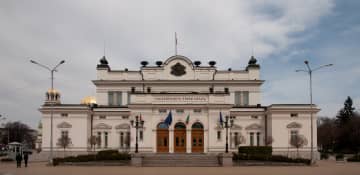
The National Assembly's Budget and Finance Committee has merged the three bills amending the Gambling Act that MPs approved at first reading on 18 November 2026. Its report, signed by committee chair Konstantin Prodanov and stamped 19 November 2026, says the common bill was prepared under Article 77(2) of the Assembly's rules of procedure from the Council of Ministers' bill of 11 November 2026 and the bills tabled by Venko Sabrutev and a group of MPs on 4 September 2026 and by Bozhidar Bozhanov and a group of MPs on 9 September 2026.
The text runs to 81 paragraphs. In five of them the committee printed alternatives headed "Variant 1", "Variant 2" and, in three cases, "Variant 3" (our translation from Bulgarian). The report does not say who wrote which. iGaming Times compared each variant with the three bills as tabled: Variant 1 is the government's wording throughout, and the others come from the two opposition bills. Sabrutev sits in the We Continue the Change group and Bozhanov in the Democratic Bulgaria group, according to the Assembly's records.
The open paragraphs cover Article 9 (further prohibitions), Article 10 (the advertising ban), Article 17 (the National Revenue Agency's powers), Article 105 (fines) and the legal definition of gambling advertising.
The Three Versions of Article 10
Variant 1, from the government bill, replaces Article 10 with a ban on advertising gambling games, organisers, their trademarks and distinctive signs "regardless of the format, manner and place of distribution" (our translation). It exempts information on an operator's website and in licensed premises, Bulgarian Sports Totalisator draws, facade signs of up to 20% of the facade and 50 square metres, and branding on sports equipment and facilities under sponsorship, except items meant for minors. Licensed operators may sponsor licensed sports clubs and federations and events supporting culture, healthcare and education.

Variant 2, from Sabrutev's bill, bans "any form of advertising, direct or indirect" (our translation) and lists ten channels, among them broadcast, print, websites and social networks, outdoor sites, vehicles, bonus and promotion messages, the public announcement of odds and jackpots, and operators' sponsorship of media and programmes. Its exceptions are narrower: Totalisator draws, the same facade limit, the operator's official website, and a trademark or name on sports kits of up to 10 cm by 10 cm, provided the kit is intended for people over 18.
Variant 3, from Bozhanov's bill, amends the existing article instead of replacing it. It extends the listed channels to audiovisual media services, websites, online news services, mobile apps and online platforms within the meaning of Regulation (EU) 2022/2065, online advertising service providers under Regulation (EU) 2022/1925, and direct messages. It would have the National Revenue Agency publish monthly data on violations.
Fines and Blocking Powers
On fines, Variant 1 sets €20,000 to €50,000 for an operator. Those who publish, broadcast or distribute the advertising face a fine of €10,000 to €20,000 or a pecuniary sanction of €20,000 to €50,000, doubled for a repeat violation. Variant 2 sets €75,000 to €150,000 for operators and for those who carry the advertising.
On enforcement, Variant 1 lets the agency order the blocking of websites, mobile apps, social media profiles and video and streaming platforms that advertise gambling. Variants 2 and 3 instead let it order publication to stop and temporarily suspend access to the services of online advertising providers that systematically ignore its orders; Variant 3 caps that suspension at one month.
Some opposition clauses went into the common text with no alternative. One, from Bozhanov's bill, makes an internet or hosting provider liable if it does not remove unlawful content or restrict access within twelve hours of learning of it or of receiving an order.
What Is No Longer in Question
The fiscal and licensing provisions appear once. Affiliate licences end on 1 January 2027. The online fee is 21% of stakes less winnings from 1 January 2027 and 22% from 1 January 2028, with a minimum of €100,000 a month, as notified to Brussels in October. The law takes effect on 1 January 2027, except the variable land-based fee and a tax repeal, which follow on 1 January 2028. The merged text contains no transition period for existing advertising contracts.
Proposals Filed So Far
The bill register gives 27 November 2026 as the date for proposals on the merged bill. It shows no second-reading report and no plenary date.
Tsoncho Ganev and Dimo Drenchev, both of the Vazrazhdane (Revival) group, filed a proposal on 20 November 2026 built on Variant 1. It adds an exception where an operator's trademark is part of the name of a sponsored event or is the object of product placement, with only the registered mark shown and the programme not intended for children. It removes liability for broadcasting an event where a mark is lawfully present or the event is held outside Bulgaria, if the broadcaster neither placed the mark nor was paid for it. It gives the revenue agency supervision of everyone who distributes commercial communications.
The same proposal rewrites the commencement clause so that "paragraph 8" enters into force "from 31 December 2029" (our translation). In the committee's text, paragraph 8 is the one that amends Article 10. The proposal numbers other paragraphs differently from the committee's text, and its reasoning does not mention the later date, so its intended effect could not be confirmed from the document.
A second proposal, filed on 24 November 2026 by Kaloyan Ivanov of Democratic Bulgaria, would delete a clause on cash payments in construction that the bill adds to another law.
The Choice Has Been Deferred to Second Reading
All three versions restrict gambling advertising across broadcast, online and outdoor channels. They differ on what operators may still do. The government's wording keeps sponsorship of sport, culture, healthcare and education. Sabrutev's exceptions mention sport only for a small mark on kit intended for adults. Bozhanov's defines the online channels by reference to EU platform regulations.
The committee's second-reading report will have to settle on one text for each open paragraph before the plenary votes. With commencement set for 1 January 2027 and no date yet for that report, operators, clubs and media owners still cannot tell which sponsorship rules, or which fines, will apply.