Illinois Moves to Bring 50,141 Video Gaming Terminals Into Self-Exclusion
 By Antonina Tupikova · Founder, iGaming Times3 min read
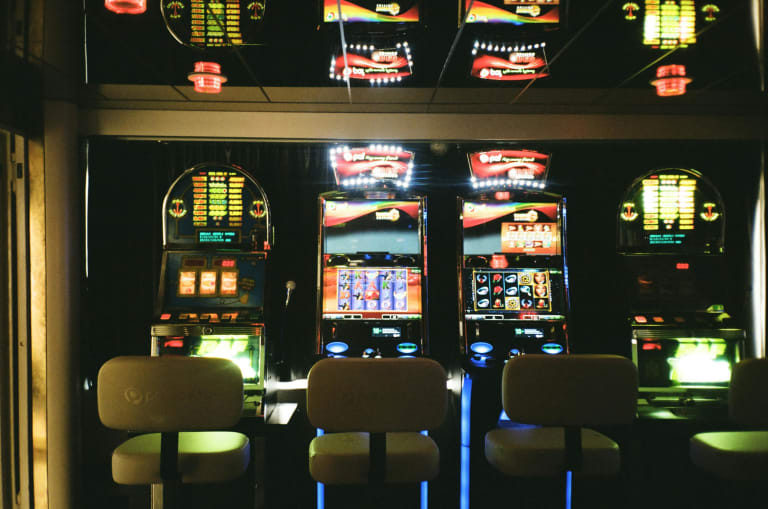
The Illinois Gaming Board has approved proposed rules that would put an identity check in front of every video gaming terminal in the state and open the way to cashless player accounts. A comment period, legislative review and a central system still being built stand between the vote and the venues.
- The Illinois Gaming Board (IGB) approved proposed rules on 22 October that would bring the state's video gaming terminals (VGTs) into its Self-Exclusion Program, with players checked through identity verification at redemption terminals
- Terminals would stop taking cash directly; players would buy vouchers at a redemption device with cash or through an optional video gaming account that must offer responsible gaming limits
- IGB data show 8,800 licensed establishments ran 50,141 terminals in September, when $2.997 billion was played and net terminal income reached $278.4 million, up 7.8% on a year earlier
- The proposal is not in force: it must pass a public comment period and review by the General Assembly's Joint Committee on Administrative Rules (JCAR), which Capitol News Illinois says usually takes six months to a year
- The integration depends on a new Light & Wonder (LNW Gaming) central system, which Capitol News Illinois reported is due by 31 December 2027
Illinois Puts an ID Check in Front of the Largest VGT Network of Its Kind
The IGB voted on Thursday 22 October to approve proposed rules listed on its meeting agenda as "Rules for Video Gaming Self-Exclusion Program and Cashless Wagering". Enrolled people would be barred from VGTs through identity verification at the redemption terminals already in licensed establishments, the board said, as reported by CDC Gaming. The vote was unanimous, according to Capitol News Illinois. IGB Administrator Marcus Fruchter called the integration "a gaming integrity and public health priority for the IGB" and said the rule would "set clear guardrails as the video gaming industry moves toward digital payments".
Terminals would no longer accept cash directly, Capitol News Illinois reported. Players would buy vouchers from a payout device with cash or through a voluntary video gaming account, and both routes would require identity verification confirming the player is at least 21 and not excluded. That is the method the board endorsed in September, when its press release described identity card readers on redemption terminals and ticket-in, ticket-out (TITO) vouchers used to start play and redeem winnings.
Terminal operators could elect to offer cashless play and player rewards through patron accounts, funded by approved payment methods and subject to identity verification, privacy controls, and know-your-customer (KYC) and anti-money laundering rules, according to the IGB. "Every video gaming player account must also allow patrons to set their own responsible gaming limits," the board said. Operators would have to stop self-excluded people opening accounts and could not send them promotions, Capitol News Illinois reported. The rule text was not posted with the agenda, and iGaming Times has not reviewed it.

A Market That Has Never Had a Self-Exclusion Option
The programme dates from 2002 and covers casino gambling and sports wagering, according to the IGB; rules proposed in September would add fantasy contests. Enrolment requires an in-person visit to one of about 41 sanctioned sites, the IGB said in September, and nearly 16,000 people have signed up, Capitol News Illinois reported.
Video gaming is the largest gap. IGB statewide figures for September show 8,800 establishments and 50,141 terminals, $2.997 billion played and net terminal income of $278.4 million, against $258.3 million a year earlier. Over the fiscal year to June 2026, net terminal income totalled $3.31 billion and tax $1.16 billion. Illinois casinos, by comparison, reported $178.2 million in September adjusted gross receipts.
In September the board adopted amendments replacing what it called "the existing lifetime ban with a five-year minimum exclusion period" with terms from six months to indefinite, authorising new enrolment channels such as an online portal, and creating a Marketing Exclusion List that extends the ban on targeted marketing for 12 months after an exclusion ends. It also resolved to bring video gaming into the programme. Those amendments are going through the same JCAR process.
What Happens Next
Under the Illinois Administrative Procedure Act, a proposed rule is published in the Illinois Register, opening a first notice period of at least 45 days in which the agency must accept comments from any interested person. The agency then files a second notice with JCAR, a further 45-day period after which no substantive change may be made except in response to JCAR. Fruchter told Capitol News Illinois that the effect of cashless play on spending is one issue the board wants to discuss during public comment.
The hardware is the other clock. Light & Wonder announced on 16 April a 10-year contract to supply and operate its CONNEXUS Central Communication System for the IGB, and Fruchter said the system would "enable the IGB's integration of its self-exclusion program into video gaming". Capitol News Illinois reported in September that the contract is worth $162 million and carries a 31 December 2027 deadline to complete the transition, with fines for delays. Fruchter told the outlet he was confident the work would be ready to deploy next year.
The Voucher Gate Matters More Than the List
Beyond the list's roughly 16,000 names, every VGT session would begin with an identity check for age and exclusion status, in the bars, petrol stations, hair salons and hotel lobbies where Capitol News Illinois says the machines sit. That reaches every player, and keeping cash at the redemption device eases the friction without removing the check. Pennsylvania offers the nearest comparison: its regulator runs a self-exclusion list for truck-stop VGTs, one of four lists with about 30,000 active enrolments, and its new enrolments rose 18% to 9,677 in the year to June. Illinois would apply the check to a far larger distributed network.
Cashless Accounts Bring the Tools and the Risk Together
Accounts carry the rule's protections, and they are also where spending can rise. Acres Manufacturing, a Las Vegas cashless technology supplier, found in a six-month case study that cashless players bought 92% more credits per session, Capitol News Illinois reported; that is a vendor's study of its own product, but the board has chosen to examine the point rather than dismiss it. Because operators elect whether to offer accounts, how many players see the limit tools depends on take-up. The test is whether cashless play arrives with protections that are used, not merely offered.
The Timeline Runs Into 2027
Two tracks must finish before anything changes in a venue, alongside the technical standards the September release listed as a further step: a rulemaking that Capitol News Illinois puts at six months to a year, and a central system due by the end of 2027. With $1.16 billion a year in tax at stake, the board's monthly figures will show quickly whether ID checks change play.
Illinois is proposing to close the biggest gap in its self-exclusion coverage with a check that applies to every player, not only those who enrol. Whether it works depends on a central system not yet delivered and on how the board answers its own question about cashless spending.