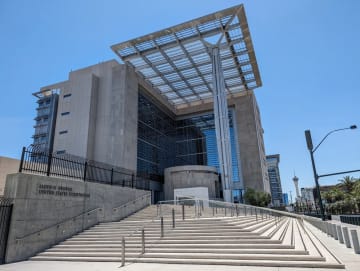
Ninth Circuit Rules Kalshi's Sports Contracts Are Not Swaps in 3-0 Nevada Win
 By Antonina Tupikova · Founder, iGaming Times3 min read
A federal appeals court has rejected the argument on which the entire prediction market industry rests, holding that a sporting result is not the kind of event the Commodity Exchange Act was written to cover. It is the clearest defeat Kalshi has suffered, and it points directly at the Supreme Court.
- The United States Court of Appeals for the Ninth Circuit ruled 3-0 in favour of Nevada on 28 August 2026, affirming in substantial part the district court order that dissolved Kalshi's preliminary injunction against the state's gaming regulators
- The panel held that Kalshi had failed to show a likelihood that the Commodity Exchange Act preempts Nevada's gaming laws as applied to sports-related event contracts
- Central to the reasoning is that the statutory definition covers an event with a financial, economic or commercial consequence, which the court found does not describe the result of a sporting contest
- The court remanded only the separate question of election contracts to the district court, leaving that issue open
- The decision conflicts with the Third Circuit's earlier ruling in Kalshi's favour, and the resulting split is the shortest route the dispute has yet had to the Supreme Court
The Panel Took Apart the Argument the Whole Sector Is Built On
The Ninth Circuit handed down its decision on 28 August 2026, ruling three to nil in favour of Nevada and rejecting the proposition that the federal Commodity Exchange Act preempts the application of state gaming law to sports-event contracts offered by Kalshi, Crypto.com and Robinhood.
The court affirmed, in substantial part, the district court's order dissolving the preliminary injunction Kalshi had obtained against Nevada's gaming regulators. At its core the panel held that Kalshi had not shown a likelihood of success on its claim that the Commodity Exchange Act displaces Nevada's gaming regulations as they apply to its sports-related contracts.
The reasoning turned on the statutory text. According to the analysis of the ruling published by Holland & Knight, the court found that Kalshi's sports contracts are likely not swaps, because the definition in the Act refers to the occurrence or non-occurrence of an event associated with a financial, economic or commercial consequence, rather than to the result of a sporting contest. That distinction does the work of the entire judgment: if a sports outcome is not the sort of event the Act contemplates, the federal framework Kalshi has been invoking does not reach the product at all.

The court remanded a single issue. The separate question of election contracts goes back to the district court for further analysis, and remains unresolved.
A concurrence by Judge Kenneth K. Lee addressed the position of tribal regulators directly, noting the historical role of Indian Tribes in regulating sports gambling. Holland & Knight, writing for practitioners in tribal regulatory law, described the opinion as meaningful support for the principle that the regulation of gambling remains a matter for states and Tribes rather than an incidental byproduct of federal derivatives oversight. That framing matters given the amicus activity tribal coalitions have already mounted in parallel cases.
Nevada Had Set Out Its Position Long Before the Court Agreed With It
The Nevada Gaming Control Board welcomed the decision in a statement issued the same day. Board Chairman Mike Dreitzer said the ruling vindicated the state's consistent position, that the activity in question is sports betting and requires state regulation, and noted that the Board has regulated gaming in Nevada for more than 70 years. Governor Joe Lombardo commended the Board in the same release.
The Board's legal position is set out plainly in that statement. It considers the offering of sports event contracts, along with certain other event contracts, to constitute wagering activity under NRS 463.0193 and NRS 463.01962. On that reading, entities offering the contracts without a licence operate in violation of NRS 463.160, NRS 463.350, NRS 465.086 and NRS 465.092.
The Board also said it has taken decisive action in recent months to halt the operations of other prediction markets in the state, and has successfully restricted unlicensed prediction markets known to have been operating in Nevada. The ruling now supplies appellate backing for enforcement the Board was already conducting.
The Swaps Question Was Always the Whole Case
Strip away the procedural history across a dozen states and the prediction market argument reduces to one claim: that a contract on a sporting outcome is a swap, that swaps are federally regulated, and that federal regulation leaves no room for state gaming law. Every injunction Kalshi has won and every cease-and-desist it has resisted has rested on that chain. The Ninth Circuit has now broken the first link, and it did so on the plainest available ground, which is what the statute actually says an event is. A ruling that Kalshi loses on the balance of equities can be litigated around. A ruling that its product was never within the federal definition is far harder to work with, because it does not depend on the facts of the Nevada dispute.
A Circuit Split Is the Fastest Route to the Supreme Court
The Third Circuit reached the opposite conclusion, and two federal appeals courts now disagree on whether state gaming law can reach the same product. That is the classic condition for Supreme Court review, and it arrives with a set of state enforcement actions already running in Connecticut, Montana, Massachusetts, New York and Ohio. For operators, the practical consequence is that the question of whether prediction markets may offer sports contracts nationwide is now likely to be settled once, centrally, rather than state by state. For the states, the Ninth Circuit gives them the stronger of the two appellate authorities to cite while they wait.
The Election Contracts Remand Is the One Thing Kalshi Salvaged
The court sent the election contracts question back rather than deciding it, and that is the narrow ground Kalshi retains. Election contracts sit differently: an election result has more plausible claim to a financial, economic or commercial consequence than the outcome of a football match, and the reasoning that disposed of the sports contracts does not transfer automatically. Operators reading this ruling for what survives should note that the court declined to extend its holding, and that the district court now has to work through the distinction. It is a real opening, but it is a narrow one, and it does not touch the sports products that generate the volume.
The Ninth Circuit has given the states the ruling they have been asking for, on the ground they most wanted it. What happens next is no longer a question about Nevada.