Philippines to Review 14-Day Visa-Free Entry for Chinese Nationals Over POGO Concerns
 By Antonina Tupikova · Founder, iGaming Times3 min read
Malacañang has asked the Department of Foreign Affairs to look at whether January's visa-free scheme for Chinese visitors is being used to staff illegal offshore gaming and scam hubs. It is a review, not a decision, and the scheme was due one before it expires anyway.
- Palace Press Officer Claire Castro said on 20 October that she had raised the visa-free entry granted to Chinese nationals with the Department of Foreign Affairs (DFA), which would look at whether it is being exploited to commit crimes
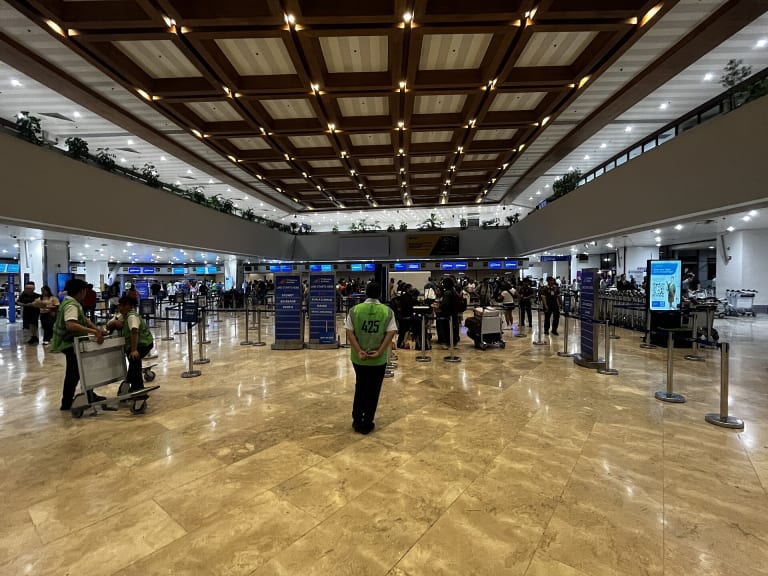
- The scheme, in force since 16 January 2026, allows a non-extendable 14-day stay through Manila's and Cebu's main airports, and the DFA said at launch it would run for one year and be reviewed before it expires
- The referral follows the 2 October raids in Zamboanga Sibugay, after which the National Bureau of Investigation (NBI) said 81 foreigners had entered under the arrangement; reports of Castro's briefing say 82
- No DFA statement or policy change has been announced, and the Department of Tourism wants visa-free entry extended to more airports after Chinese arrivals rose 69.15% in the first eight months
- A Department of Justice undersecretary said on 22 October that the operations are much smaller than before the ban but "clearly it's still there", a pattern of dispersal seen from Cambodia to South Korea
The Palace Sends a POGO Question to the Foreign Ministry
President Ferdinand Marcos Jr. has ordered law enforcement to "arrest them all", Castro told a Palace briefing on Tuesday 20 October, according to the Manila Bulletin and GMA News. Asked about reports that Philippine offshore gaming operator (POGO) activity had continued despite the ban, she cited raids on 2 October in Zamboanga Sibugay and on 18 October in Makati City, and said the police and the Presidential Anti-Organized Crime Commission (PAOCC) were acting.
On entry rules, her words were cautious. "Because of this, I have already raised with the DFA the possible issues surrounding the visa-free entry policy for our Chinese friends," she said, in the Manila Bulletin's translation from Filipino, adding that the DFA would look into whether the policy is causing problems or having an adverse effect in relation to crimes committed in the country. She was answering a question about a suggestion from Winston Casio, a former PAOCC spokesperson, according to GMA News. We found no statement from the DFA itself.

The arrangement under review is narrow. The DFA announced on 15 January that from 16 January Chinese nationals could enter without a visa for up to 14 days, citing the President's directive to facilitate trade, investment and tourism. It applies to tourism and business travel only, the stay cannot be extended or converted to another visa, and entry is limited to Ninoy Aquino International Airport (NAIA) in Metro Manila and Mactan-Cebu International Airport. Checks for derogatory records continue. The notice said the arrangement "will be in effect for one year and will be reviewed accordingly before it expires".
What the Raids Found
The Bureau of Immigration said it arrested 244 foreign nationals, mostly Chinese, at two sites in Siay and Alicia on 2 October. On 12 October NBI Director Melvin Matibag said 259 people, including two minors, had been rounded up, that 101 foreigners were for deportation and that nine people had been charged with financial and cybercrime offences, according to the Daily Tribune. Investigators found that 81 foreigners had entered under the 14-day visa-free arrangement, the Tribune reported; some trade reports of Castro's briefing put the figure at 82 Chinese nationals. The NBI is also examining whether officials were involved.
Casio, at a Quezon City forum reported by Remate on 19 October, said operations had moved from large compounds into condominium units, that by his estimate thousands of people linked to them remain in and around Metro Manila, and he questioned why the government had offered Chinese nationals visa-free and visa-on-arrival entry. Those are his estimates, not official findings.
Marcos announced the ban in his July 2024 State of the Nation Address and it took full effect at the end of that year. Justice Undersecretary Nicholas Felix Ty said on 22 October that the operations targeted recently were much smaller than before it, some "mom-and-pop" and some in a single room. "But clearly it's still there, we're not denying that the problem still exists," he said, according to the Inquirer, which reported that Chinese nationals are being apprehended for overstaying after entering visa-free.
The Review Was Written Into the Policy From the Start
The most important line is in January's notice, not Tuesday's briefing. The DFA always intended to review the arrangement before it lapses in mid-January 2027, so what Castro has done is give that review a security brief rather than create one. Nothing has been suspended or tightened, and the DFA has said nothing in public. The outcomes run from renewal unchanged, through tighter checks, to letting the privilege lapse, and the raids have shifted the burden of proof onto those who want it renewed. It also lands on the first anniversary of the Anti-POGO Act, Republic Act No. 12312, dated 23 October 2025.
The Numbers Behind the Concern Are Small, and the Tourism Case Is Large
Eighty-one or 82 visa-free entrants among the people swept up at Zamboanga Sibugay is a real finding: a 14-day tourist privilege that ends in a scam compound in Mindanao has been abused by definition. It is also small against the 310,088 Chinese visitors the Department of Tourism counted from January to August on preliminary eTravel data, a 69.15% increase that made China the fourth-largest source market. Tourism Secretary Dita Angara-Mathay said on 1 September that she wanted visa-free entry extended to Clark, Caticlan, Palawan and Bohol. This is the enforcement gap in miniature: the visa rules already prohibit work and extensions, so the question for the DFA is whether airport screening and overstay tracking work, not whether a visa requirement would stop determined recruiters.
Pressure Moves These Operations, It Rarely Ends Them
Ty's "mom-and-pop" sites and Casio's condominiums describe operations that have dispersed rather than disappeared, and the region shows the pattern. Cambodia has made its online gambling shutdown permanent, and South Korean police said the network behind 188 illegal sites and KRW23 trillion in bets ran from bases in Vietnam, Cambodia and South Korea. Labour and infrastructure move to whichever neighbour makes entry easiest. For the Philippine Amusement and Gaming Corporation (PAGCOR), whose chairman Alejandro Tengco has said POGOs will not reopen during Marcos's term, the cost is reputational: every raid that pairs gaming with trafficking strengthens the legislators who have filed bills to ban domestic online gambling as well.
Manila has asked a sensible question in public at the point it was always due to ask it. The answer will show whether the government treats visa policy as a tourism lever or as the front line of a ban it is still enforcing.