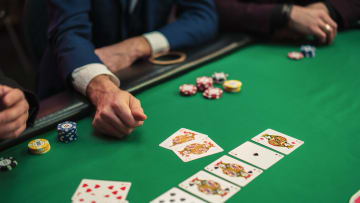
Kangwon Land Replaced One Member's Points Card 146 Times in a Year, Lawmaker's Data Show
 By Antonina Tupikova · Founder, iGaming Times3 min read
Kangwon Land has no limit on how often a casino member's points card can be replaced, and says it cannot check replacement records against its misuse records, according to data released by a lawmaker during the National Assembly's audit season. The worry is "comp-kkang", the resale of casino points for cash that goes back into gambling.
- One Kangwon Land member received 146 replacement High1 Resort Cards in 2024, about one every 2.5 days, according to data the company submitted to Rep. Cha Gyu-geun of the Rebuilding Korea Party
- The year's most frequent replacer received 92 cards in 2022, 145 in 2023 and 125 in 2025, yet neither the card's terms nor Kangwon Land's guidelines cap replacements or require checks on repeat requests, Yonhap News Agency reported
- Kangwon Land told Cha's office that replacement records and misuse records are kept in separate systems to protect personal information and cannot be matched
- Cha says a physical card can be handed to someone else, making repeated replacement a possible channel for comp-kkang; the reports tie no case of misuse to the members concerned and give no loss figure
- The findings follow the new chief executive's review of the ₩3 trillion K-HIT plan and six years of losses at KL Saberi, as lawmakers audit the only casino open to Koreans
One Card Every 2.5 Days, and No Rule That Asks Why
Cha Gyu-geun, a Rebuilding Korea Party member of the National Assembly's Trade, Industry, Energy, SMEs and Startups Committee, released the figures on 7 October, during the Assembly's annual audit of state agencies. They come from data Kangwon Land submitted to his office, as reported that day by Pinpoint News and by Yonhap News Agency from Jeongseon, where the resort stands. We have not seen the submission and could not find it published by his office.
High1 Resort Cards are Kangwon Land's membership cards. Casino players earn High1 points, known as comps, according to their play, and can spend them like cash at the resort and at member merchants in the former coal-mining counties around it. According to the data, the member with the most replacements received 92 new cards in 2022, 145 in 2023, 146 in 2024 and 125 in 2025. Three members were among the 10 most frequent replacers in all four years, the highest of them with 480 replacements in total, Pinpoint News reported. Neither report gives the overall number of replacements or says whether the top replacer was the same person each year.
The risk Cha describes is diversion. Unlike the High1 smartphone app, which requires identity verification, a physical card can easily be passed to someone else, Yonhap reported, so handing over a card and getting a new one, again and again, could become a route for comp-kkang: selling points cheaply and turning the proceeds back into gambling money. Nothing in the terms or guidelines limits replacements or requires a check on unusual patterns, according to both reports. Kangwon Land told Cha's office that replacement history and misuse history sit in separate systems to protect personal information and cannot be cross-checked. Beyond that, we found no public statement from the company.

Member merchants number 1,746, while two or three staff are dedicated to on-site inspections, Yonhap reported. "If one person received a new points card 146 times in a year, Kangwon Land should first look into why," Cha said, in our translation. "If frequent losses come from excessive gambling, the user needs protection; if the cards are being circulated improperly, that has to be stopped." He urged limits on replacements or tracking where cards actually end up.
Comp Misuse Has Been an Audit Theme Three Years Running
In October 2024, data obtained by Rep. Heo Seong-mu of the Democratic Party showed 14 cases of comp misuse detected in the first eight months of that year, against an average of 2.6 a year from 2019 to 2023, Newsis reported. The most common type was point sales recorded at merchants that had sold nothing or were closed. Kangwon Land terminated all 14 merchants' contracts and said misuse was becoming more sophisticated. Heo linked the rise to an increase in the comp earning rate from 10% to 15% that year.
At the 2025 audit, Heo cited ₩38.7 million (approximately $28,900) of Korean beef gift sets paid in comps at one local shop in a single day as a case that could only be read as comp-kkang, Money Today reported. Data obtained by Rep. Kim Dong-ah of the Democratic Party showed detected cases rising from one or two a year in 2020 to 2023 to 29 in 2024, with four inspectors covering about 1,600 merchants. Choi Chul-gyu, then acting chief executive, conceded lapses and promised tighter management.
The money is substantial. Of ₩124.2 billion (approximately $92.7 million) of comps issued in 2024, ₩35.5 billion, or 28.5%, was spent in the four former mining counties, Newsis reported in January. From 1 January the daily limit per customer at local merchants rose from ₩170,000 to ₩250,000 (approximately $187), and the monthly cap per merchant from ₩3 million to ₩4 million, the first change to both since 2011.
The Rules Already Ban What Cha Describes; Nothing Watches for It
The gap is not in what the rules forbid. The High1 Resort Card terms, last revised on 25 August 2025, require members to use their own card, bar lending or transferring it and define comp-kkang as misuse. A replacement carries a fee, a form and an identity check by staff, and the old card is cancelled. On paper, every one of those 146 replacements was a staffed, identity-checked transaction; what appears to be missing is anything that counts them. Keeping replacement and misuse records apart is a design choice about two datasets the company holds on the same members, and it meant the pattern surfaced through a lawmaker's data request rather than an internal alert. That is an enforcement gap, not a drafting one, and on Yonhap's figures the inspection team is smaller than the one Kim described a year ago, for a larger network.
Frequent Loss Is a Harm Signal as Well as a Fraud Signal
Cha's own framing deserves weight: a card lost every few days may point to a player in difficulty rather than a broker. The card is part of Kangwon Land's player-protection machinery. Under its terms, players who visit the casino on 15 days in two consecutive months, or more than 30 days in a quarter, must hold one or may be refused entry, and applicants for a physical card are asked to take a self-assessment test for excessive gambling. A member replacing a card every 2.5 days is very likely among the most frequent visitors, the group Cha highlighted on 5 October, when his data showed that 50.1% of the 12,586 people who visited on 30 days or more between January and mid-September were aged 60 or over, Seoul Economic TV reported. Either reading calls for the same response: someone looking at the account.
Higher Limits Make the Control Question More Urgent
The comp scheme was introduced partly to push casino money into a region with few other sources of spending, and January's increase sends more of it there. It also raises what a diverted card is worth. Chief executive Kim Do-gyun has a committee diagnosing the company's organisation and personnel systems until the end of the year; a replacement limit and linked records are the kind of narrow fix such a review could adopt without waiting on Seoul.
Nothing in the data shows that the 146 cards were sold on, and Cha does not say they were. What the data show is that Kangwon Land had no system set up to tell it either way.