Kangwon Land Slips to a KRW3.6bn Third Quarter Net Loss on Bond Markdowns
 By Antonina Tupikova · Founder, iGaming Times2 min read
The only casino open to Korean citizens still made a KRW59.7 billion operating profit between July and September. Bond losses wiped it out, while fewer visitors and 757 closed rooms squeezed the business underneath.
- Kangwon Land reported provisional consolidated third quarter sales of KRW369.5 billion, approximately $271.9 million, down 3.8% year on year, in a regulatory filing on 6 November
- Operating profit fell 17.9% to KRW59.7 billion, but a KRW55.2 billion loss on financial items, which the company blames on bond valuation losses, left a net loss of KRW3.6 billion against a KRW113.1 billion profit a year earlier
- Casino revenue fell 1.8% to KRW327.8 billion as visitors fell 3.2% and drop fell 4.2%, while the members' floors grew 9.6%
- Non-casino sales fell 17.4% to KRW41.7 billion because 757 hotel and condominium rooms, 41% of the resort's total, are being renovated under the first phase of the K-HIT plan now under review
- Nine-month net profit is down 41.8% to KRW145.9 billion, and the company plans a KRW20 billion share buyback this year
Bond Markdowns Turned a Smaller Operating Profit Into a Net Loss
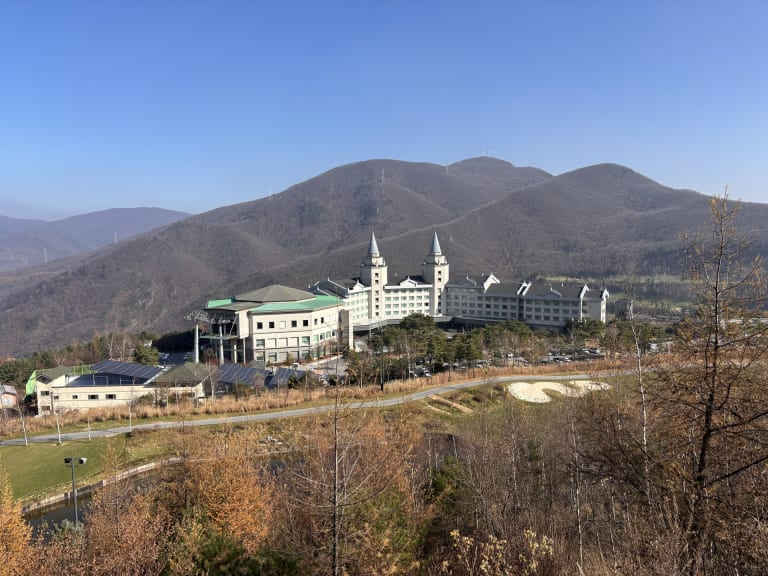
Kangwon Land, whose High1 casino in Jeongseon, Gangwon Province, is the only casino in South Korea open to Korean citizens, as Asia Economy has reported, filed provisional consolidated results for the three months to 30 September in a fair disclosure on DART on Friday 6 November. The figures have not been reviewed by the auditor and may change; reviewed statements are due on 16 November, the company says.
Sales were KRW369.5 billion, down 3.8% from KRW384.1 billion a year earlier and up 6.9% on the second quarter. Operating profit fell 17.9% to KRW59.7 billion, approximately $43.9 million, from KRW72.7 billion, though it was 36.2% above the second quarter's KRW43.8 billion. The operating margin narrowed to 16.1% from 18.9%, as costs fell only 0.5%.
The larger move came below the operating line. Financial items produced a loss of KRW55.2 billion, approximately $40.6 million, against a gain of KRW73.2 billion a year earlier. In its Korean language results statement, Kangwon Land attributes this to fair value losses on bonds after a sharp rise in yields, and says principal and interest are guaranteed if the bonds are held to maturity. Pre-tax profit fell 97.4% to KRW3.7 billion, and after KRW7.4 billion of tax the company recorded a net loss of KRW3.6 billion, approximately $2.7 million. Nine-month sales were KRW1.094 trillion, down 1.6%, and operating profit KRW172.4 billion, down 16.1%.
Fewer Players on the General Floor, More in the Members' Rooms
Casino operating revenue fell 2.5% to KRW359.4 billion on 640,039 visits. On the general floor, which includes foreigners, revenue fell 4.8% to KRW294.9 billion as visitors fell 3.4% and drop 6.5%, with tables down 6.6% and slots down 2.6%. The members' floors moved the other way: revenue rose 9.6% to KRW64.5 billion on 11.1% more visitors.

Net of KRW35.6 billion of comps and including casino food and drink, accounting casino revenue was KRW327.8 billion, approximately $241.3 million. Levies on casino operating revenue, 13% to the coal region development fund, 10% to the tourism fund and 5.2% in consumption taxes, came to KRW101.3 billion.
757 Rooms Out of Service Until 2028
Non-casino sales fell to KRW41.7 billion, approximately $30.7 million. Hotel revenue fell 21.6%, condominium revenue 12.0% and the Water World park 14.5%. The company blames the renovation, begun in March, of 757 ageing rooms: 477 in the Grand Hotel main tower, due back in the first quarter of 2028, and 280 at the Mountain Condo, due in the fourth quarter of 2027.
Kangwon Land has spent KRW110.1 billion of its KRW145.4 billion 2026 investment budget, including on a second casino floor. It says it will buy back KRW20 billion of shares, approximately $14.7 million, this year, and its policy is to pay out at least 50% of net profit in dividends.
The Loss Is a Bond Story, Not a Casino Story
The swing in financial items, about KRW128.5 billion, exceeds the KRW116.7 billion fall in net profit, so the loss rests on investment marks. Headlines blaming gaming and renovations describe the operating line, not the loss. The maturity argument holds as far as it goes: losses on bonds held to term unwind if nothing defaults. But the results material gives neither the portfolio's size nor its duration, and the same line contributed KRW97.3 billion of gains in the second quarter. Kangwon Land's reported profit now swings on its treasury as much as its tables.
Hold Did Not Cause the Casino Dip
On our arithmetic, casino operating revenue was about 23.4% of total drop, against about 23.0% a year earlier, so the decline came from volume rather than luck. Fewer people came, and those on the general floor bought fewer chips. Foreigner-only rivals such as Paradise, which posted a record quarter, draw on inbound tourism; Kangwon Land's 7,506 foreign visits, up 5.7%, were about one in 85 entries.
The Renovation Bill Arrives Before the Rooms Return
With 41% of its rooms closed until late 2027 or early 2028, non-casino sales fell to 11.3% of revenue from 13.1%, just as the KRW3 trillion K-HIT plan, built on a larger non-casino offer, is under review by a chief executive who took office in September. A dividend tied to net profit means the weaker nine months will reach shareholders unless the bond losses reverse in the fourth quarter.
Kangwon Land's casino is softer but still profitable. Whether 2026 ends as a weak year or a poor one may depend more on fourth quarter bond yields than on the gaming floor.