Macau's Six Concessionaires Commit MOP9 Billion to a Government Fund That Counts Towards Their Non-Gaming Pledges
 By Antonina Tupikova · Founder, iGaming Times3 min read
All six of Macau's casino operators signed up on Friday as passive investors in a MOP20 billion government guidance fund, with every pataca credited against the non-gaming spending they promised for their 2023 concessions. Sands China says its share replaces projects it had planned to build.
- Macau's six gaming concessionaires committed a combined MOP9 billion (approximately $1.1 billion) on 23 October to the Macao SAR Government Guidance Fund No. 2, Limited Partnership Fund, according to their Hong Kong stock exchange announcements
- Sands China's Venetian Macau and Galaxy Casino committed the most, about MOP2.30 billion and MOP2.27 billion, and Melco Resorts (Macau) the least, MOP828.0 million
- Each notice says the money counts towards the operator's investment obligations under its concession, and Sands China says its commitment replaces other projects and spend it had planned
- The government says the fund's first phase totals MOP20 billion, with MOP11 billion from the returns on its fiscal reserves, to back emerging industries, technology and projects with Hengqin
- The operators are limited partners with no role in day-to-day management, in a fund run by a government-owned company for 15 years, as Macau's mass-market baccarat revenue fell 7.9% in the third quarter
Six Operators Sign the Same Partnership Agreement on the Same Afternoon
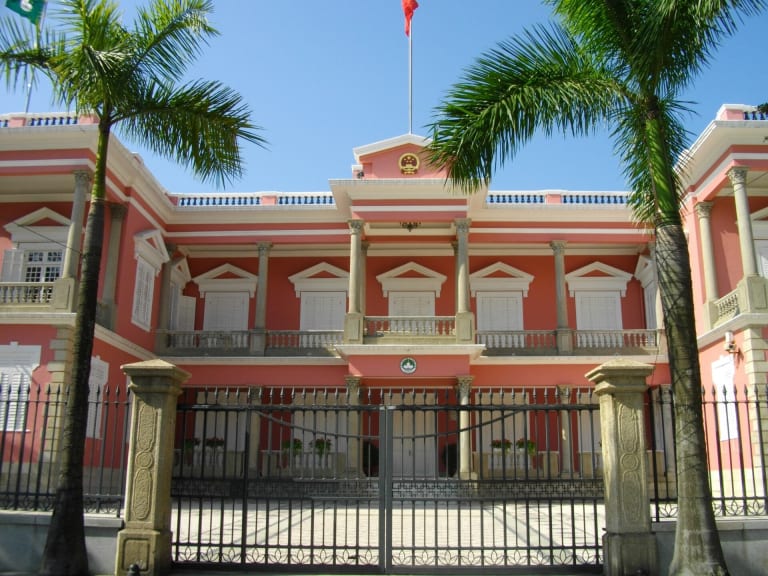
The six concessionaires signed a single limited partnership agreement on Friday 23 October, each with its own subscription agreement with the fund's general partner, according to their Hong Kong exchange announcements. The ceremony at the Government Headquarters was witnessed by Chief Executive Sam Hou Fai, Zheng Xincong, director of the Central People's Government Liaison Office, and Secretary for Economy and Finance Ng Wai Han, according to the Government Information Bureau's Chinese-language release, which says it marks the start of the fund's operation.
The commitments, in descending order: Venetian Macau, the Sands China subsidiary, about MOP2.30 billion (approximately $285 million); Galaxy Casino, the Galaxy Entertainment Group subsidiary, about MOP2.27 billion ($281 million); Wynn Resorts (Macau) up to MOP1,365,030,000 ($169 million); MGM Grand Paradise MOP1.24 billion ($154 million); SJM Resorts MOP992.7 million ($123 million); and Melco Resorts (Macau) MOP828.0 million ($103 million). Melco International says its share is about 9.2% of the MOP9.0 billion total, and the general partner may add up to MOP10 million of its own.
Wynn Macau, SJM Holdings and Melco International filed theirs as discloseable transactions, because at least one Listing Rules size test came to 5% or more; Sands China and MGM China called theirs voluntary.

A Government Fund with the Concessionaires as Passive Partners
The fund is a limited partnership under Law No. 11/2025 on investment funds and Administrative Regulation No. 26/2026 on government guidance funds. Its general partner is Macau Project Management (No. 2) Limited and its manager is Macau Investment and Management Company Limited, both ultimately owned and controlled by the government, according to Sands China and SJM Holdings. Its term runs 15 years from commercial registration, with up to two one-year extensions, and MGM China says the first five years are the investment period.
The operators get little say. The general partner and the manager have "full, exclusive and complete discretion" over the fund, subject to an investment committee and, where required, the Secretary for Economy and Finance, according to SJM Holdings. The limited partners take no part in day-to-day management, their interests are not traded and cannot be transferred without the general partner's consent, and no new partners are admitted after closing, according to Melco International. The manager is paid a management fee; none of the notices gives its level or a return target.
The scope, set out identically by Wynn, SJM and Melco, runs from emerging industries and technology start-ups to projects with the Guangdong-Macao In-depth Cooperation Zone in Hengqin and the Greater Bay Area, and "other investment projects that are consistent with the policy direction" of the government.
The government's release puts the first phase at MOP20 billion (approximately $2.5 billion): MOP11 billion ($1.4 billion) from the accumulated returns on its fiscal reserves and MOP9 billion from the six operators as the first private capital. It describes a three-tier structure of guidance fund, mother fund and sub-funds, the lower two run by publicly selected managers. The notices cover only fund No. 2 and do not say how the government's MOP11 billion is held. Ng said the fund serves the "1+4" strategy, which pairs integrated tourism and leisure with four nascent industries: big health, modern finance, high and new technology, and conventions and exhibitions, sport, commerce and trade.
Credited in Full Against the Concession Pledges
When the concessions were signed in December 2022, the six operators promised MOP118.8 billion of investment over the decade, of which MOP108.7 billion (approximately $13.5 billion) was for overseas markets and non-gaming projects, according to the government. Every notice says the fund commitment counts towards those obligations. Wynn, SJM and Melco say contributions are deemed to fulfil the obligation "in the same amount", and Melco says its amount was set with reference to the fund's capital needs and its own non-gaming commitment.
Sands China goes furthest. Venetian Macau's concession commitment is at least MOP35.84 billion, about MOP33.39 billion of it non-gaming, due by 31 December 2032, and the fund commitment "replaces other projects and spend anticipated" within it, the company says.
The Fund Turns Resort Spending Into a Policy Budget
The MOP9 billion is about 8.3% of the non-gaming investment pledged in 2022, and MGM's share is the same 8.3% of its own MOP15 billion non-gaming commitment, which suggests the burden was shared in proportion to each operator's pledge. For the operators, that is attractive: money they had to spend in Macau anyway now goes into a fund with a claim on future distributions, rather than into shows, attractions or hotel rooms at a time when September GGR fell for a fourth month running and Las Vegas Sands reported a 17% fall in third-quarter EBITDA. For the government, the change is larger. Spending that was promised as overseas-market and non-gaming projects, carried out by the operators, is now directed by a government-owned manager towards the four nascent industries of the "1+4" strategy. Sands China's line that the commitment replaces other projects is the clearest statement that this is substitution, not new money.
The Investors Carry the Risk and Hold None of the Levers
The operators' credit against their concessions is fixed at the amount contributed, but whatever they get back depends on a fund they cannot steer, with no disclosed fee, a 15-year term and transfers that need the general partner's consent. When the fund was announced in February, officials did not say whether the operators would contribute, and set no fixed return target, expecting it to be judged on social outcomes as well as financial ones, according to Macau Business. That the operators accepted these terms across the board says more about the relationship between concessionaire and grantor than about the fund's investment case.
The six have handed the government MOP9 billion of their non-gaming obligation to direct, and have been credited for it in full. Whether Macau gets the diversification it wants now depends on a fund manager, not on the casinos.