Missouri's AG Sends Every Prediction Market a Cease-and-Desist and Names a Price
 By Antonina Tupikova · Founder, iGaming Times3 min read
Catherine Hanaway says sports contracts "fit four square the definition of gambling in Missouri", that they siphon money from sportsbooks that pay the state's tax, and that what she wants is an agreement putting the exchanges under Missouri gaming law and taxing them. If there is no agreement she will sue; she expects them to sue her first.
- Missouri Attorney General Catherine Hanaway is sending cease-and-desist letters to "every prediction market company operating in Missouri", she told Heartland News on Wednesday, 17 September
- "The way that they take contracts, as what they would call them, I call them bets online on sporting events, is just like how FanDuel and others do it," she said; the fee structure differs, "but it still fits four square the definition of gambling in Missouri"
- Her stated goal is an agreement under which the companies "submit to Missouri gaming laws" and are taxed like a gambling site; she said her office has seen settlements between exchanges and other states, and if none is reached in Missouri "we will file a lawsuit"
- The fiscal case is explicit: "I think it siphons a lot of money from a lot of the other sports betting sites that have to pay tax in Missouri," where mobile betting launched on 1 December 2025 with a 10% tax
- She cited two safeguards the exchanges lack: "They don't have any kind of age verification, so we are concerned that they have people playing that are not of age," and "we have seen in some jurisdictions some sort of insider trading"
- She expects the letters to produce litigation: "Chances are they may sue us once they get this cease-and-desist letter, because these companies argue that they are regulated at the federal level as a commodity, like the corn and bean futures"
A Late Entrant With a Different Ask
Missouri is not an early state in the prediction markets fight, and Hanaway's approach differs from the ones that were. Nevada, New Jersey, Ohio, Maryland and Illinois sent cease-and-desists in the spring of 2025 and were sued for it; Massachusetts, Connecticut and New York went to court themselves. Missouri had no legal sports betting until December, when the market approved by voters in November 2024 finally launched, and the state has spent its first nine months learning what a 10% tax on sportsbook revenue is worth to it.
That is the frame Hanaway chose. Asked why the state was acting, her first answer was not consumer protection but revenue: the exchanges take the same wagers as FanDuel and DraftKings and pay nothing to Missouri for doing so. Her second answer was the two arguments every state has used, the absence of age verification and the insider trading cases, but the order is telling. So is the remedy. Rather than a ban, she wants "an agreement that would submit them to Missouri gaming laws" and "require them to be taxed like a gambling site", and she said her office had studied settlements between exchanges and other states before choosing that route.
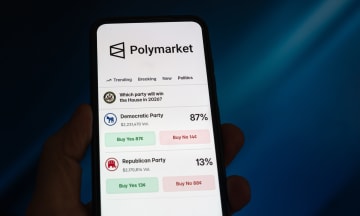
The letters go to every company operating in the state, which by her description includes Polymarket as well as Kalshi. She named both.
The Legal Position She Is Walking Into
Hanaway's statement that the exchanges "argue that they are regulated at the federal level as a commodity, like the corn and bean futures or farmers' trade, that they have the same regulatory entity, and we say not quite like that" is the whole dispute in a sentence. Missouri sits in the Eighth Circuit, which has not ruled on the question. The Ninth Circuit ruled against Kalshi for Nevada and then for two California tribes this month, holding that the Commodity Exchange Act and state or tribal gaming law "address two different questions". Other district courts have granted the exchanges injunctions. The Supreme Court's conference on Kalshi's petition is on 28 September, ten days after the letters.
A state that sends a cease-and-desist in September 2026 knows more than one that sent it in March 2025. Hanaway's office has the Ninth Circuit's reasoning, the Maryland district court ruling against Kalshi and the tribal decision to cite, and the CFTC's own posture, which has included suing a state to block enforcement, to prepare for. Her comment that the companies "may sue us" suggests the office would rather defend a declaratory action in Missouri than file one.
Missouri Leads With the Word Tax
Every state in the fight has a fiscal interest. Most have led with the 21-year-old age limit, the compact with the tribes or the licence the sportsbooks paid for, and left the tax to the briefs. Hanaway put it first and said what she wants: the exchanges inside Missouri's gaming law, paying Missouri's rate. That is the "bridge" outcome the licensed industry has quietly favoured since it started building its own exchanges, and it is a very different demand from Nevada's, which was that the product stop.
A Settlement Would Set the Price for Every Other State
If an exchange agreed to Missouri's terms, register, verify age at 21, geofence to the state's rules and pay 10% of revenue, it would have conceded that a state can regulate a designated contract market's sports contracts, which is the point it is litigating everywhere else. That is why no exchange has done it, and why Hanaway's reference to settlements "in other states" is worth checking; what other states have obtained are withdrawals and stipulations, not tax. The first taxed settlement would be quoted in every attorney general's office in the country the same afternoon.
The Eighth Circuit Is Open Ground
The exchanges have picked their venues carefully, and Missouri's federal courts have not been one of them. A Missouri case would give the Eighth Circuit its first look at the question, and a ruling there in either direction would add to the split the Supreme Court is being asked to resolve. Hanaway is inviting that fight in her own courthouse, with the Ninth Circuit's two opinions in her brief.
Missouri legalised sports betting nine months ago. It has now told the exchanges that the price of Missouri is a Missouri licence.