Skip to content
iGaming Times

Choose your emails

Which emails would you like?

Independent industry intelligence in your inbox. We will email you a link to confirm the emails you ticked, and every email carries a one-click unsubscribe link. Each list can be left on its own.

Sovereign state
Africa
ISO ZA

South Africa: gambling regulation and licensing

Republic of South Africa

  • Online sports bettingRegulated
  • Online casinoProhibited
  • Online pokerProhibited
  • Online bingoProhibited
  • Lottery and iLotteryMonopoly
  • Horse race bettingRegulated
  • Land-based (reference)Regulated
Regulator
National Gambling Board
Headline tax
See Taxation
Licence required
Yes
Last verified
21 Oct 2026

Summary

South Africa licenses online sports and horse racing betting but bans online casino, poker and bingo. The National Gambling Act, 2004 prohibits any "interactive game" not authorised by national law (s.11), and the 2008 amendment that would have licensed interactive gambling has never been brought into operation. A bet is not a gambling game under the Act, so bookmakers and totalisators may take bets online under provincial licences. Licensing and tax are provincial: nine provincial licensing authorities license operators, while the National Gambling Board, an agency of the Department of Trade, Industry and Competition, oversees them, keeps national registers and publishes statistics. The market is large and moving online. In the year to March 2025 gross gambling revenue reached R74.5 billion, betting accounted for R52.0 billion, up 44.7 per cent, and the NGB estimates that at least R44.5 billion of betting revenue was generated online, with the Western Cape and Mpumalanga the biggest betting provinces. Provincial tax on bookmakers averages 6 to 9 per cent of revenue, according to National Treasury, which has proposed an additional national tax of 20 per cent on online GGR that still awaits draft legislation. The boundary between betting and casino play is contested. The Supreme Court of Appeal ruled in October 2025 that Gauteng bookmakers may not offer bets on live roulette, the NGB says casino-style bookmaker contingencies breach s.11, and the Western Cape Board says its approvals remain lawful. The government plans a new gambling Bill, the 2018 amendment Bill sits with a mediation committee, and the NGB has sought a supplier to block illegal online gambling sites.

Common pitfalls

Treating a provincial bookmaker licence as covering casino games: s.11 of the National Gambling Act bars interactive games, the Supreme Court of Appeal has held bets on live roulette unlawful in Gauteng, and the NGB regards such contingencies as unlawful everywhere. Assuming one national tax rate: gambling tax is set province by province, and the proposed 20 per cent national online tax is not yet law. Reading the 315 licensed bookmakers as online licences: the NGB count covers all licensed operational bookmakers. Relying on a foreign licence: the court held that a licence abroad for a streamed game is irrelevant to gambling that takes place in South Africa. Advertising an operator that is not licensed in the province concerned.

Key facts

Regulator
National Gambling Board (NGB)
Regulator type
Gaming board
Headline tax
See Taxation
Licence required
Yes
Minimum age
18+
Tax base
Gambling tax is provincial: each province sets rates by regulation and its licensing authority collects them, generally on gross gambling revenue (stakes less winnings paid). National Treasury puts casino tax at an average of 10 to 15 per cent of GGR and bookmaker tax at an average of 6 to 7 per cent (elsewhere in the same paper 6 to 9 per cent) of winning bets or net gaming revenue. Examples it gives: in Gauteng, bookmakers pay 6.5 per cent of gross betting revenue and casinos 9 per cent of gross gaming revenue; in the Western Cape, bookmakers pay a 3 per cent tax and a 3 per cent betting levy calculated on winning bets, totalisators 6 per cent of taxable revenue, and casinos a progressive 8 to 19 per cent. Provinces collected R5.81 billion in gambling taxes and levies in FY2024/25, of which R3.42 billion came from betting, 84 per cent of it from online betting. The national GGR tax is not yet law (see scheduledChanges).
Capital
Pretoria
Currency
ZAR
Official languages
English, Afrikaans, Zulu, Xhosa

How to get a gambling licence in South Africa

The regulator is the National Gambling Board (NGB).

We record 3 licence types for South Africa.

For the Bookmaker licence (provincial), the application fee is R16,343 (as of 1 Apr 2026) and the annual fee is R3,278 (as of 1 Apr 2026).

Financial guarantee
Provincial deposits on application: in the Western Cape R31,982 for a bookmaker licence and R239,873 for a totalisator operator licence (P.N. 113/2026, Annexure A).

Licence fees in South Africa

Licence typeApplication feeAnnual feeTerm
Bookmaker licence (provincial)Western Cape example from 1 April 2026: R16,343 new licence application fee, R31,982 deposit, R3,278 annual licence fee and R13,088 annual investigation fee; each bookmaker premises licence adds a R16,343 application fee, R31,982 deposit, R664 annual licence fee and R1,631 investigation fee. Other provinces set their own fees.R16,343 (as of 1 Apr 2026)R3,278 (as of 1 Apr 2026)Not yet verified
Totalisator operator licence (provincial)Western Cape example from 1 April 2026: R327,009 application fee, R239,873 deposit, R6,542 annual licence fee and R163,512 annual investigation fee.R327,009 (as of 1 Apr 2026)R6,542 (as of 1 Apr 2026)Not yet verified
Key employee and gambling employee licencesWestern Cape key employee licence: R664 application fee, R2,877 deposit, R176 annual licence fee and R664 investigation fee. Gambling employee licence: R176 application fee and R176 annual licence and investigation fees.R664 (as of 1 Apr 2026)R176 (as of 1 Apr 2026)Not yet verified

Built from the record on this page, last verified 21 Oct 2026. The Licensing and Taxation sections carry the full detail and sources.

Licensing

Licence required
Yes
Application window
Not yet verified
Local establishment required
Not yet verified
Local server required
Not yet verified
Active licences
315 (as of 31 Mar 2025)
Bank guarantee or bond
Provincial deposits on application: in the Western Cape R31,982 for a bookmaker licence and R239,873 for a totalisator operator licence (P.N. 113/2026, Annexure A).
Notable licensees
Betway (Raging River Trading (Pty) Ltd), Western Cape, Hollywoodbets (Hollywood Sportsbook Western Cape (Pty) Ltd), Sportingbet SA (Greatodds (Pty) Ltd), Western Cape, YesPlay (SA Sportsbook (Pty) Ltd), Western Cape, Easybet Group (Pty) Ltd, Western Cape, Playabets WC (Pty) Ltd, SunBet (Pty) Ltd, Supabets (Portapa), 10Bet, Mpumalanga, Lottostar, Mpumalanga, World Sports Betting, Betfred SA
Certification requirements
Gambling machines and devices must be registered and certified before use (National Gambling Act, s.9 and Chapter 2, Part D; National Gambling Regulations). GN R. 7113 of 2026 sets the window for recertifying technical amendments at 24 months around the lapse of a letter of certification.
Barriers to entry
Licensing is provincial: an operator needs a licence from each province in which it takes bets, under that province's Act, fee schedule and tax. No licence can be issued for online casino, poker or bingo while s.11 of the National Gambling Act stands. The count of 315 is the NGB's number of licensed operational bookmakers at 31 March 2025 (down from 349), with 594 bookmaker outlets; it is not a count of online licences. The NGB's verified operator list, updated 4 September 2026, is compiled from provincial data.

Licence types

  • Bookmaker licence (provincial)

    Scope
    Fixed-odds and open bets on sport, horse racing and other lawful contingencies, at licensed premises and, where the provincial authority allows, online. Issued by each province's licensing authority; there is no national online licence.
    Application fee
    R16,343 as of 1 Apr 2026
    Annual fee
    R3,278 as of 1 Apr 2026
    Fee basis
    Western Cape example from 1 April 2026: R16,343 new licence application fee, R31,982 deposit, R3,278 annual licence fee and R13,088 annual investigation fee; each bookmaker premises licence adds a R16,343 application fee, R31,982 deposit, R664 annual licence fee and R1,631 investigation fee. Other provinces set their own fees.
  • Totalisator operator licence (provincial)

    Scope
    Pool (totalisator) betting on horse racing and sport. 4Racing is the totalisator in every province except KwaZulu-Natal, where Gold Circle and Ithotho operate.
    Application fee
    R327,009 as of 1 Apr 2026
    Annual fee
    R6,542 as of 1 Apr 2026
    Fee basis
    Western Cape example from 1 April 2026: R327,009 application fee, R239,873 deposit, R6,542 annual licence fee and R163,512 annual investigation fee.
  • Key employee and gambling employee licences

    Scope
    Individuals employed in the gambling industry must be licensed (National Gambling Act, Chapter 2, Part E).
    Application fee
    R664 as of 1 Apr 2026
    Annual fee
    R176 as of 1 Apr 2026
    Fee basis
    Western Cape key employee licence: R664 application fee, R2,877 deposit, R176 annual licence fee and R664 investigation fee. Gambling employee licence: R176 application fee and R176 annual licence and investigation fees.

Taxation

Headline GGR tax
Not yet verified
Effective date
Not yet verified
Player winnings tax
None in force. A 15 per cent withholding tax on gambling winnings above R25,000 was proposed in the 2011 Budget for 1 April 2012 but not implemented after consultation found enforcement and compliance complexities.
VAT treatment
Betting is within VAT: s.8(13) of the Value-Added Tax Act, 1991 deems the person with whom a bet is placed to supply a service to the punter, and s.16(3)(d) allows the supplier to deduct the tax fraction of prizes and winnings paid, so operators account for output tax on bets net of winnings.
Tax base
Gambling tax is provincial: each province sets rates by regulation and its licensing authority collects them, generally on gross gambling revenue (stakes less winnings paid). National Treasury puts casino tax at an average of 10 to 15 per cent of GGR and bookmaker tax at an average of 6 to 7 per cent (elsewhere in the same paper 6 to 9 per cent) of winning bets or net gaming revenue. Examples it gives: in Gauteng, bookmakers pay 6.5 per cent of gross betting revenue and casinos 9 per cent of gross gaming revenue; in the Western Cape, bookmakers pay a 3 per cent tax and a 3 per cent betting levy calculated on winning bets, totalisators 6 per cent of taxable revenue, and casinos a progressive 8 to 19 per cent. Provinces collected R5.81 billion in gambling taxes and levies in FY2024/25, of which R3.42 billion came from betting, 84 per cent of it from online betting. The national GGR tax is not yet law (see scheduledChanges).

Scheduled changes

  • 20% of online GGR (combined 26% to 29% with provincial tax) from No date proposed; not among the key proposals in the 2026 draft tax bills published on 30 July 2026.
    Proposed

    National online gambling tax on gross gambling revenue from online betting and interactive gambling, additional to provincial taxes and administered by SARS. Comments closed 27 February 2026; Treasury said draft legislation would follow for comment later in 2026.

Earmarked levies

  • Gauteng Sports Development Fund levy on bookmakers: 1 per cent (as tabulated by National Treasury from GN 570 of 1997) (Sports Development Fund (Gauteng))
  • Western Cape betting levy on bookmakers: 3 per cent, calculated on winning bets

Compliance

Minimum age
18+
KYC timing
Before the person is permitted to gamble (s.12(4)).
AML regime
Financial Intelligence Centre Act, 2001: gambling businesses licensed by the NGB or a provincial licensing authority are accountable institutions (Schedule 1, item 9). They must file cash threshold reports for cash above R49,999.99, suspicious and unusual transaction reports and terrorist property reports through goAML. A licensee may not exchange cash for cash except for play, and may not pay out by cheque or transfer in exchange for cash, chips or tokens unless satisfied the patron genuinely gambled (reg. 5).
Affordability checks
None prescribed for play. A casino, bookmaker or totalisator licensee may extend credit to a patron only after obtaining sufficient information on the patron's identity, credit history and financial capability (reg. 4), and credit contrary to the Act is prohibited (s.13).
Source of funds thresholds
Cash threshold report to the FIC for any cash transaction above R49,999.99.
Central monitoring system
The NGB runs a national central electronic monitoring system to which every limited payout machine must be linked (s.27). There is no national monitoring system for online betting.
KYC requirements
A licensee must take reasonable measures to determine accurately whether a person is a minor (under 18) before letting them gamble (s.12(4)), and prescribed measures to identify excluded persons (s.14(11)). As accountable institutions under the FIC Act, gambling businesses must identify and verify customers under their risk management and compliance programme.
Stake limits
Not yet verified
Mandatory player messaging
Warnings on the dangers of addictive or compulsive gambling on every gambling machine and at every point of purchase used by a bookmaker or totalisator, A3 posters on help for problem gambling, and pamphlets on the National Responsible Gambling Programme (reg. on standards for premises). Licensees must make the exclusion form and a directory of counselling services available at their premises (s.14(12)). The National Responsible Gambling Programme helpline is 0800 006 008.
Reporting obligations
Licensees report to their provincial licensing authority, which supplies quarterly turnover, GGR and tax data to the NGB for the national statistics (NGA s.65(2)(e)). Winnings that cannot lawfully be paid, for example to a minor or an excluded person, must be remitted to the NGB (s.16(3); Form NGB 2).
Game content restrictions
In Gauteng, bookmakers may not offer fixed-odds bets on casino games such as roulette ([2025] ZASCA 158). The NGB regards casino-style contingencies offered by bookmakers anywhere as breaching s.11; the Western Cape Board disagrees for its province.

Advertising

Advertising permitted
Yes
Affiliate rules
Affiliates are not licensed nationally. Advertising unlawful gambling, which includes promoting operators not licensed in South Africa, is prohibited (s.15(1)(a)(ii)), and the NGB has asked provincial authorities to remove advertising by operators not licensed in their province.
Celebrity and influencer rules
The NGB's December 2025 directive requires provincial authorities to make licensees withdraw influencer, brand ambassador or social media promotions that are misleading, lack responsible gambling messages or otherwise breach s.15 and regulation 3.
Social media rules
The regulation 3 warning covers web pages and text messages, and the NGB's 2025 directive extends compliance reviews to social media. On 17 September 2026 the NGB and the Advertising Regulatory Board announced a formal partnership to monitor gambling advertising across traditional and digital platforms.
Bonus advertising rules
A person may not advertise or promote gambling as available free of charge or at a discounted rate contrary to the Act as an inducement to gamble (s.15(3)).
Mandatory warnings
Every advertisement of a gambling machine or device, gambling activity or licensed premises must warn against the dangers of addictive and compulsive gambling (s.15(2)(a)), including at least the name, toll-free number and slogan of the National Responsible Gambling Programme and a statement that only persons aged 18 or over may lawfully gamble. In print and email the warning must be in a font at least the size of the body text; on television and video each slogan must be legible for at least three seconds; radio and voice messages must be clearly audible; telephone hold messages must repeat it at least every three minutes; and on billboards, web pages and multi-page pamphlets it must occupy at least 10 per cent of the billboard, the home page or the front page (reg. 3(2)).
Penalties for breach
Contravening s.15 is an offence (s.82(1)) punishable by a fine of up to R10 million or up to 10 years' imprisonment (s.83(1)); an offence by a licensee is also a breach of licence (s.82(3)), with an administrative penalty of up to 10 per cent of annual turnover (s.83(2)). The NGB has asked provincial authorities to impose fines, extra licence conditions or suspensions for non-compliant advertising.

Restrictions

  • Gambling may not be advertised in a false or misleading manner, unlawful gambling may not be advertised at all, and advertising may not target or attract minors (s.15(1)).
  • Advertising may not encourage removal from the register of excluded persons, or present gambling as free or discounted as an inducement (s.15(2)(b) and (3)).
  • Advertising may not portray excessive play, present gambling as a way out of financial difficulty, as an alternative to employment or an investment, or imply that winning is probable or that gambling mainly involves skill (reg. 3(1)).
  • No persons who are or appear to be under 18, and no placement in media aimed at under 18s, at venues where most of the audience is likely to be under 18, or on outdoor displays directed at schools, youth centres, technikons or university campuses (reg. 3(1)(h) and (i)).
  • Each advertisement must also meet the requirements of the relevant provincial legislation (reg. 3(2)(b) and (c)).
  • On 1 December 2025 the NGB directed all provincial licensing authorities to review billboard, broadcast and social media advertising, remove non-compliant material and advertising by operators not licensed in their province, and report quarterly.

Payments

Credit card ban
Not yet verified
Crypto stance
Not yet verified
Payment blocking regime
No statutory payment-blocking regime. The NGB says it works with provincial authorities, SAPS, the FIC and banks to detect illegal gambling.
Withdrawal timeframe rules
No payout deadline is set nationally. A licensee may not issue a cheque or transfer funds to a patron in exchange for cash, chips, tokens or other value instruments unless satisfied that the patron genuinely gambled (reg. 5(2)).

Enforcement

ISP blocking
Not yet verified
DNS blocking
Not yet verified
Payment blocking
Not yet verified
App store takedowns
Not yet verified
Administrative penalties
A licensee in breach of a licence condition is liable to an administrative penalty of up to 10 per cent of annual turnover (s.83(2)); provincial authorities may also impose fines, additional licence conditions or suspensions under provincial law.
Criminal penalties
Contravening ss.7 to 20 of the Act, including unlicensed gambling (s.8) and unauthorised interactive gambling (s.11), is an offence (s.82(1)) punishable by a fine of up to R10 million, imprisonment of up to 10 years, or both (s.83(1)). Magistrates' courts may impose these penalties (s.84).
Operator liability
Offering an interactive game or any unlicensed gambling activity to people in South Africa is an offence regardless of where the operator is licensed. The NGB told Parliament in October 2025 that Curacao had been the source of most illegal online operators, that the Curacao regulator had not responded to requests to stop its licensees operating illegally in South Africa, and that it had approached the Department of Communications and ICASA on blocking and worked with Google on removing unlicensed operators. On 30 June 2026 it invited proposals for a website monitoring and blocking solution; submissions closed on 4 September 2026.
Player liability
Section 11 applies to anyone who engages in an interactive game, so playing at an online casino is itself an offence under s.82(1). Winnings from unlawful gambling may not knowingly be paid, must be remitted to the NGB and can be declared forfeit to the State by the High Court (s.16). Punters found at illegal gambling venues have been arrested.

Notable actions

  • Five illegal gambling sites posing as internet cafes in Modimolle and Lephalale, Limpopo6 Aug 2026

    First operations of the Illegal Gambling Task Team (NGB, Limpopo Gambling Board, Mpumalanga Economic Regulator, North West Gambling Board and SAPS) on 4 and 6 August 2026: five punters, six site managers and two cashiers arrested and R10,853.10 in cash seized

  • Illegal gambling operation, Hoedspruit, Limpopo13 May 2026

    Two people convicted by the Hoedspruit Magistrate's Court after a March 2026 raid by the Limpopo Gambling Board and SAPS: six months' imprisonment or a R2,000 fine for illegal gambling, plus seven months for immigration offences and deportation; 17 computers seized

  • Offshore illegal online gambling websites30 Jun 2026

    NGB expression of interest for a monitoring, tracking, blocking and reporting solution (reference 01/2026), revised on 17 July 2026, with submissions due by 4 September 2026

  • All provincial licensing authorities and their licensees1 Dec 2025

    Directive to review and remove non-compliant gambling advertising, including influencer promotions and advertising by operators not licensed in the province, with quarterly reporting to the NGB

  • Portapa (Pty) Ltd t/a Supabets and the Gauteng Gambling Board21 Oct 2025

    Supreme Court of Appeal declared bookmaker bets on live roulette unlawful under the Gauteng Gambling Act

Market data

Figures on this record are analyst estimates, not official regulator data.

Online GGR
R44,458,363,755 as of 31 Mar 2025
Reporting year
2025
Online share of gambling
60%
Licensed operators
315

Timeline

  1. 6 Aug 2004

    The National Gambling Act, 2004 is assented to

  2. 1 Nov 2004

    The Act comes into operation, making unauthorised interactive games unlawful

  3. 10 Jul 2008

    The National Gambling Amendment Act, 2008, providing for interactive gambling licences, is assented to but never brought into operation

  4. 4 Dec 2018

    The National Assembly passes the National Gambling Amendment Bill [B27-2018]

  5. 8 Nov 2024

    Notice of intention to introduce a private member's Remote Gambling Bill, 2024 published for comment

  6. 13 Jun 2025

    Mediation committee on the National Gambling Amendment Bill finalises its report

  7. 21 Oct 2025

    Supreme Court of Appeal rules that Gauteng bookmakers may not offer bets on casino games such as roulette

  8. 25 Nov 2025

    National Treasury publishes a discussion paper proposing a 20 per cent national online gambling tax

  9. 1 Dec 2025

    NGB directs provincial authorities to remove non-compliant gambling advertising

  10. 10 Feb 2026

    Amendments to the National Gambling Regulations on the national exclusion register are gazetted (GN R. 7113)

  11. 27 Feb 2026

    Comment period on the national online gambling tax closes

  12. 1 Jun 2026

    Sizekhaya becomes the fourth National Lottery and Sports Pools operator

  13. 26 Jun 2026

    The Minister of Trade, Industry and Competition tells Parliament that the National Gambling Policy Council has resolved to fast-track a new gambling Bill, envisaged for Cabinet later in 2026

  14. 30 Jun 2026

    NGB invites proposals for a solution to block illegal online gambling websites

  15. 4 Aug 2026

    Illegal Gambling Task Team begins operations in Limpopo

  16. Sept 2026

    Cabinet concurs in the appointment of a Board of the National Gambling Board, the first since 2014; the Minister welcomed it on 9 October 2026

  17. 17 Sept 2026

    NGB and the Advertising Regulatory Board announce a partnership on monitoring gambling advertising

Outlook

Three policy tracks are open. National Treasury said in the 2026 Budget Review that draft legislation for its 20 per cent national online gambling tax would be published for comment later in 2026; it was not among the key proposals in the draft tax bills of 30 July 2026. The Minister of Trade, Industry and Competition told Parliament in June 2026 that a new gambling Bill is envisaged for Cabinet later in the year, with gambling advertising regulations drafted alongside it, while the National Gambling Amendment Bill [B27-2018] awaits the tabling of its mediation committee report. On enforcement, the NGB's call for expressions of interest in a website blocking solution closed on 4 September 2026 and its Illegal Gambling Task Team plans to extend operations to all nine provinces. The dispute over casino-style bookmaker contingencies outside Gauteng remains unresolved between the NGB and the Western Cape Board.

Frequently asked questions

Is online casino legal in South Africa?
No. Section 11 of the National Gambling Act, 2004 bars anyone from engaging in or making available an interactive game unless national law authorises it, and the 2008 amendment that would have done so has never come into operation. Contravention is an offence punishable by a fine of up to R10 million or up to 10 years' imprisonment, and it applies to players as well as operators.
Who licenses online sports betting?
The nine provincial licensing authorities, such as the Western Cape Gambling and Racing Board and the Mpumalanga Economic Regulator, license bookmakers and totalisators under provincial law. The National Gambling Board oversees them and publishes a list of verified licensed operators; there is no national online licence.
How is online betting taxed?
Through provincial gambling taxes, which National Treasury puts at an average of 6 to 9 per cent of bookmakers' revenue; Gauteng charges bookmakers 6.5 per cent of gross betting revenue. Treasury has proposed an additional national tax of 20 per cent of online gross gambling revenue, but it has not yet been legislated. Players pay no tax on winnings.
Can bookmakers offer casino-style games such as live roulette?
Not in Gauteng: the Supreme Court of Appeal ruled on 21 October 2025 that bets on casino games including roulette are unlawful for Gauteng bookmakers. The NGB considers such contingencies a breach of s.11 in any province, while the Western Cape Board says its approved contingencies remain lawful under its own Act.
How big is the South African market?
Gross gambling revenue was R74.5 billion in the year to 31 March 2025, of which betting contributed R52.0 billion. The NGB estimates that at least R44.5 billion of betting revenue, and about 60 per cent of all gambling, was online.
What rules apply to gambling advertising?
Advertising may not be misleading, promote unlawful gambling or target minors, and must carry a warning with the National Responsible Gambling Programme's name, toll-free number and slogan and a statement that only people aged 18 or over may gamble; on web pages the warning must cover at least 10 per cent of the home page. The government is drafting new advertising regulations.
How much does a gambling licence cost in South Africa?
For the Bookmaker licence (provincial), the application fee is R16,343 (as of 1 Apr 2026) and the annual fee is R3,278 (as of 1 Apr 2026). For the Totalisator operator licence (provincial), the application fee is R327,009 (as of 1 Apr 2026) and the annual fee is R6,542 (as of 1 Apr 2026). For the Key employee and gambling employee licences, the application fee is R664 (as of 1 Apr 2026) and the annual fee is R176 (as of 1 Apr 2026). Last verified 21 Oct 2026.

Events in South Africa

Glossary and directory

iGT coverage of South Africa

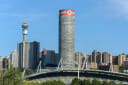
The Johannesburg skyline with the Hillbrow Tower and Ponte Tower
General

Africa's Responsible Gambling Bodies Form a Continent-Wide Network

Gamble Pause Initiative Africa, Gamble Aware Nigeria and the South African Responsible Gambling Foundation have formed the ARGN, with participants from nine more countries, to build a continent-wide evidence base on gambling harm. Its president says regulators must legislate before the costs land on Africa's health systems.

Sources

Source tiers. Tier 1: the law, official gazette, licence register or regulator itself. Tier 2: other official sources such as ministries, parliaments, courts and statistics agencies. Tier 3: established trade press, used to find and date the primary source. Only tier 1 and tier 2 sources can support a fact on their own.

  1. Tier 1Accessed 23 Sept 2026Published 12 Aug 2004
  2. National Gambling Regulations (GN R1342 of 12 November 2004, consolidated)

    Southern African Legal Information Institute

    The SAFLII consolidation is updated only to 5 September 2012. It does not include Government Notice No. R. 7113 of 10 February 2026, which substituted parts of regulations 2 and 8 and the exclusion forms (source za-ngr-2026). It is relied on here for regulations 3, 4 and 5 and the premises standards, which R. 7113 did not amend.

    Tier 1Accessed 23 Sept 2026
  3. National Gambling Act (7/2004): National Gambling Regulations, 2004, amendment (Government Notice No. R. 7113), Government Gazette No. 54106

    Department of Trade, Industry and Competition, Government Gazette (published by the National Gambling Board)

    Tier 1Accessed 23 Sept 2026Published 10 Feb 2026
  4. National Gambling Board: home page

    National Gambling Board

    Tier 1Accessed 23 Sept 2026
  5. Mandate

    National Gambling Board

    Tier 1Accessed 23 Sept 2026
  6. Enforcement: gamble legally

    National Gambling Board

    The NGB states that online gambling is prohibited except online betting through bookmakers licensed in South Africa for online betting. The Western Cape Gambling and Racing Board FAQ (source za-wcgrb-faq) says any form of online gambling is illegal under the National Gambling Act, although that Board licenses bookmakers that take bets online. The NGB statement, which matches ss.4, 5 and 11 of the Act, is preferred.

    Tier 1Accessed 23 Sept 2026
  7. Tier 2Accessed 23 Sept 2026Published 9 Oct 2025
  8. Gambling Sector Performance in South Africa 2024/25: summary report

    National Gambling Board

    The split between online and retail betting uses disaggregated data from six provinces only (Western Cape, Mpumalanga, Limpopo, North West, Eastern Cape and Northern Cape). Betting in Gauteng, KwaZulu-Natal and the Free State is counted as retail, so the online figures are a lower bound, and the NGB describes them as an estimation.

    Tier 2Accessed 23 Sept 2026
  9. Tier 2Accessed 23 Sept 2026Published 15 Oct 2025
  10. Tier 1Accessed 23 Sept 2026Published 17 Jul 2026
  11. Tier 1Accessed 23 Sept 2026Published 22 Jun 2026
  12. The case for a national online gambling tax, 2025 (draft discussion paper for public comment)

    National Treasury

    The paper puts provincial tax on bookmakers at an average of between 6 and 7 per cent of winning bets or net gaming revenue in section 5, and between 6 and 9 per cent in section 7. Both ranges are recorded as the paper states them. The provincial rate tables it gives are examples derived from provincial regulations, not a complete schedule.

    Tier 2Accessed 23 Sept 2026Published 25 Nov 2025
  13. Tier 2Accessed 23 Sept 2026Published 25 Feb 2026
  14. Tier 2Accessed 23 Sept 2026Published 30 Jul 2026
  15. Tier 1Accessed 23 Sept 2026
  16. Tier 1Accessed 23 Sept 2026Published 1 Dec 2022
  17. Tier 1Accessed 23 Sept 2026Published 21 Oct 2025
  18. Media statement: WCGRB position on the SCA judgment concerning contingencies offered by bookmakers

    Western Cape Gambling and Racing Board

    The Board says the Supabets judgment has no bearing on the Western Cape and that its approved contingencies remain lawful. The NGB told Parliament on 15 October 2025 (source za-ngb-ar-2025) that the Western Cape and Mpumalanga allow interactive gambling as bookmaker contingencies in breach of s.11 of the National Gambling Act. The disagreement is recorded rather than resolved.

    Tier 1Accessed 23 Sept 2026Published 5 Nov 2025
  19. Western Cape Gambling and Racing Regulations (Fees and Costs), 2016: Amendment, 2026 (P.N. 113/2026), Provincial Gazette Extraordinary 9215

    Western Cape Provincial Treasury, Provincial Gazette (published by the Western Cape Gambling and Racing Board)

    The fees page on the Board's website (https://www.wcgrb.co.za/fees/) still shows lower, earlier amounts (for example a R15,096 bookmaker application fee). The gazetted amounts in force from 1 April 2026 are recorded.

    Tier 1Accessed 23 Sept 2026Published 31 Mar 2026
  20. Frequently asked questions

    Western Cape Gambling and Racing Board

    Tier 1Accessed 23 Sept 2026
  21. Tier 1Accessed 23 Sept 2026Published 8 Nov 2024
  22. National Gambling Amendment Bill, 2018: notice of intention to introduce into Parliament (Notice 742), Government Gazette No. 41787

    Department of Trade and Industry, Government Gazette (published by the National Gambling Board)

    Tier 1Accessed 23 Sept 2026Published 20 Jul 2018
  23. Tier 3Accessed 23 Sept 2026
  24. Remote Gambling Bill (B11-2024): bill history

    Parliamentary Monitoring Group

    Tier 3Accessed 23 Sept 2026
  25. Tier 2Accessed 23 Sept 2026Published 26 Jun 2026
  26. Tier 1Accessed 23 Sept 2026Published 1 Jun 2026
  27. Tier 1Accessed 21 Oct 2026Published 9 Oct 2026

Spotted something out of date? Report a correction.

This page is industry reference information and not legal advice.

Cookie Preferences

Choose which cookies you want to accept. Essential cookies are required for the website to function properly.

Required

Necessary for the website to function. Cannot be disabled.

Help us understand how visitors interact with our website.

Used to deliver relevant advertisements and track ad performance.

Remember your preferences and settings for a better experience.